Why Does My Leather Jacket Turn White? The Truth About Fatty Spew
When you witness white marks on your leather jacket it becomes very frustrating. Moreover, you don’t know what caused them. In most cases, the problem comes from moisture, salt buildups and even mold. Likewise, the people often see this during storage or when the weather changes. Furthermore, sometimes the jacket gets a dusty layer. Other times it looks like a white film on leather jacket that keeps coming back even after cleaning. The good news for you is the most of these issues can be fixed at home with the best care methods. As we move ahead in this blog, Leather Jacket Turning White, you will learn the real reasons behind leather discoloration. Beyond that, you will also learn how to identify the problem and the safest ways to restore your jacket without damaging the material.
What Does It Mean When Leather Turns White?
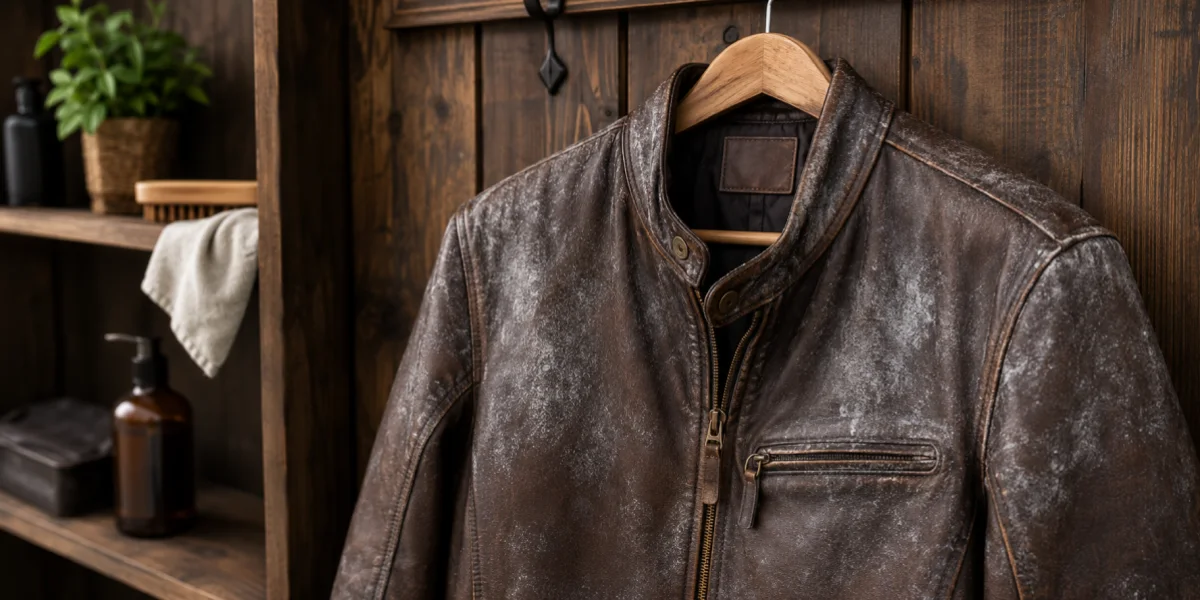
When leather starts showing white patches, powder, or cloudy marks, that usually means something has risen to the surface of the material. Moreover, these white marks can come from natural oils, salt, mold, or leftover product buildup. You need to understand the exact leather jacket white spots because each issue needs a different cleaning method.
Going ahead, we will cover how to remove white marks from leather. No one wants his jacket to look dirty. Moreover, in order to do that you can explore leather jacket cleaning solutions so you can restore your favorite jacket.
Is It Always a Serious Problem?
The White marks on leather are not always serious. However, in many cases, the issue is temporary and easy to remove. Likewise, Fatty spew and salt stains are common problems. They do not permanently damage leather if you treat them early. On the other hand,mold growth & damage may need professional treatment if you ignore them for too long. If your jacket is turning green instead of white you can go through Why Is My Leather Jacket Turning Green. It will guide you about the steps to follow.
How to Do a Quick 30-Second Diagnosis at Home
You can check your jacket at home by doing three things. First off all, smell the jacket for a musty odor. Secondly, rub the white area with a clean cloth. In addition, use gentle heat from a hairdryer for a few seconds. If the white layer melts away, it is likely fatty spew. However, if it wipes off but comes back after drying, salt may be the issue. A strong smell often points toward mold.
Fatty Spew: The Most Common Cause Nobody Tells You About
A very common reason for white marks on leather is fatty spew leather jacket buildup. This happens when natural oils inside the leather rise to the surface. Moreover, temperature changes or humidity can also cause this. The white layer may look worrying, but it is usually harmless and easy to clean.
What Exactly Is Fatty Spew?
Fatty spew happens when natural oils and waxes trapped inside leather move to the surface. Temperature changes cause this, it looks like a white or cloudy layer. Many people mistake it for mold even though it is completely different.
Why Does It Happen?
Fatty spew shows up when leather jackets are stored in cold or humid conditions. Poor ventilation and too much conditioning can also cause this issue. Furthermore, in some cases, shipping and packaging conditions make oils rise to the surface during transit.
How to Remove Fatty Spew
The easiest leather fatty bloom fix is gentle heat with soft wiping. You must use a microfiber cloth and warm the area with a hairdryer on low heat. The oils will melt back into the leather surface. Do not overheat the jacket because too much heat can dry out the leather.
Does Over-Conditioning Cause Fatty Spew?
Yes definitely using too much leather conditioner can lead to buildup. Excess oils may rise to the surface and create a cloudy white look. Likewise,sometimes a leather conditioner white residue forms when the conditioner does not get fully absorbed into the material.
Fatty Spew vs Mold vs Salt Stain: How to Tell Them Apart
White marks on leather jackets can look similar at first, but the causes are very different. Fatty spew usually looks like a waxy or cloudy layer with no bad smell. Moreover, mold often has a musty smell and a fuzzy texture. In addition, salt stains feel dry and powdery. They usually show up after exposure to snow, sweat, or rain. You need to identify the problem because each one needs a different cleaning method. On the other hand, if you need some help in scratch repair then consider going through A Guide To Leather Scratch Repair. This will guide you as to how you can take care of your jacket when it develops scratches.
The Hairdryer Test (Step-by-Step)
One of the easiest ways to identify fatty spew is the leather jacket white coating hairdryer test.
Step 1: Set the hairdryer to low heat.
Step 2: Hold it several inches away from the jacket.
Step 3: Warm the white area for 10 to 15 seconds.
Step 4: If the white layer disappears or melts slightly, the problem is fatty spew.
The Smell Test, Touch Test & Visual Test Combined
The Mold when it is formed has a musty smell. It feels damp or fuzzy. Moreover, it often spreads unevenly. Salt stains feel dry and rough. They show up after snow, sweat, or rain exposure. Fatty spew looks waxy or cloudy. It has no bad smell and it disappears with heat for a little while.
Salt Stains: When Winter Roads Damage Your Jacket
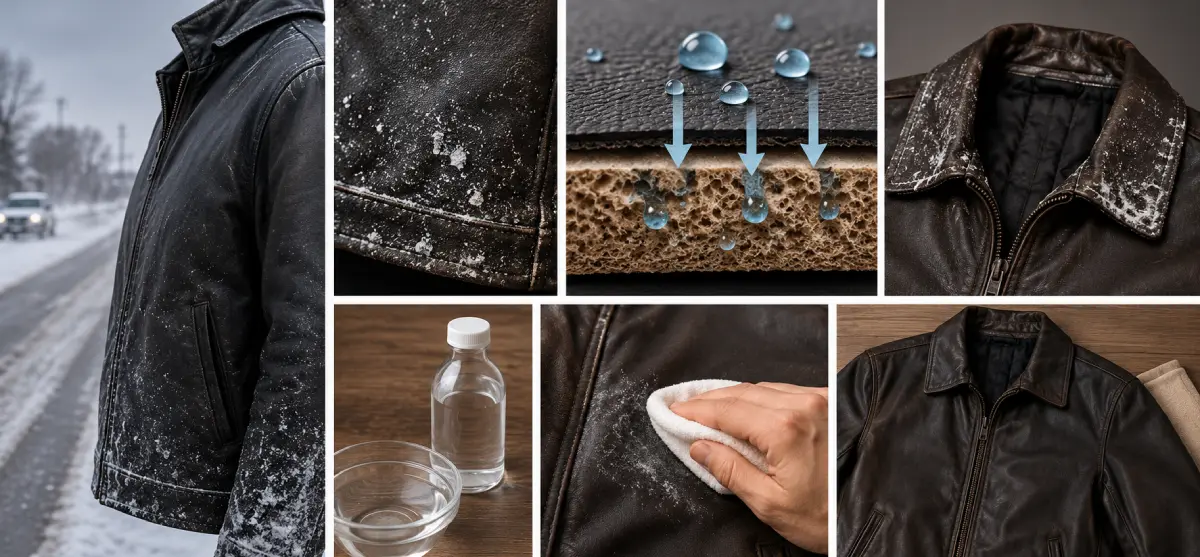
Winter weather can be hard on leather jackets. The road salt mixes with snow and moisture. The leather absorbs the salty water. White stains show up once the jacket dries. These marks are common in cold seasons. You often see them on sleeves, cuffs, and lower parts of the jacket. If you do not clean them properly, salt buildup can dry out the leather and make it feel stiff over time.
How Salt Gets Into Leather
Leather absorbs moisture easily. During winter, road salt mixes with water and enters the leather surface. Once the jacket dries, the salt crystals stay behind and create white stains.
Sweat Salt vs Road Salt — Are They Different?
Yes, both are different. Sweat salt usually appears around the collar and cuffs, while road salt commonly affects the lower parts of the jacket after outdoor exposure.
How to Remove Salt Stains at Home
To clean a salt stain leather jacket white patch, mix equal parts water and white vinegar. Dip a soft cloth into the solution and gently wipe the affected area. Let the jacket dry naturally afterward.
New Leather Jacket Turning White — Is This Normal?
Buying a new leather jacket and seeing white marks can feel worrying. However, this is often a common and harmless issue. Natural oils, waxes, or tanning salts come to the surface during storage or shipping. Moreover, changes in temperature and humidity can also cause this white coating. In most cases, you can remove the marks easily without damaging the leather.
Tanning Salts Coming to the Surface
Sometimes brand-new leather jackets develop white marks because leftover tanning salts rise to the surface after shipping or storage. This is more common in genuine leather products.
Fatty Spew During Shipping
Long shipping times and changing temperatures can trigger fatty spew inside packed leather jackets. This is especially common when jackets travel through humid climates.
What to Do When a Brand New Jacket Has White Marks
Do not panic or immediately return the jacket. First, inspect whether the marks wipe away with gentle heat or a dry cloth. Most cases can be fixed easily at home.
How to Remove White Coating from Leather: Method by Method
Getting rid of white marks on leather becomes easier once you know the real cause. Some coatings can be removed with gentle heat. Others need simple cleaning solutions like vinegar or rubbing alcohol. Using the right method helps clean the jacket safely without damaging the leather.
Method 1: Hairdryer Technique (For Fatty Spew)
This method works best for oily or waxy white layers. Use low heat only. Move the dryer constantly. Wipe gently with a microfiber cloth. This is one of the easiest ways to remove white marks from leather safely.
Method 2: Vinegar + Water Solution (For Salt Stains)
Mix equal amounts of vinegar and water. Use a clean cloth to wipe the stained area gently. Allow the leather to air dry naturally.
Method 3: Rubbing Alcohol Method (For Mold)
Use a small amount of rubbing alcohol mixed with water. Test it on a hidden spot first before cleaning visible mold patches.
Method 4: Spew Stabilizer Products — When to Use Them
Special leather stabilizers help reduce recurring fatty spew problems. These products are useful if the issue keeps returning repeatedly.
What NOT to Use on White Leather Stains
- Do not use bleach
- Avoid strong detergents
- Never soak leather in water
- Avoid direct sunlight for drying
- Do not scrub aggressively with hard brushes
These harsh methods can permanently damage leather texture and color. On the other hand, if you want to get patina on your jacket, you can explore the How to get patina on a leather jacket. This way, you can make your jacket look cool and appear smart.
White leather jackets need extra care because dirt, stains, and moisture marks become visible very quickly. Moreover, to keep the jacket looking clean, avoid dark conditioners and harsh cleaning products that may cause discoloration. On the other hand, it is also important to store white leather in a cool, dry place away from direct sunlight. Doing this prevents yellowing and surface damage over time.
Why White Leather Shows Every Problem First
White leather makes stains, oils, and moisture buildup more visible compared to darker colors. Even small marks become noticeable immediately.
Conditioners That Won’t Darken White Leather
Choose conditioners specifically made for light or white leather. Always test products on a hidden section first.
Preventing Yellowing on White Leather
Store white leather away from direct sunlight and heat. Clean dirt and sweat regularly to prevent discoloration over time.
How to Prevent Leather Jacket from Turning White
Best Storage Conditions
Store leather jackets in cool, dry places with proper airflow. Avoid damp closets or sealed storage containers.
Breathable Cover vs Plastic Bag: Why It Matters More Than You Think
A breathable garment bag allows airflow and prevents moisture buildup. Likewise, the plastic bags trap humidity, increasing the risk of mold and fatty spew.
Seasonal Leather Care Checklist
Winter
- Remove salt quickly
- Dry jackets naturally
Summer
- Keep away from humidity
- Avoid over-conditioning
Year-Round
- Clean regularly
- Store properly
- Inspect for early signs of buildup
When Should You Take Your Leather Jacket to a Professional?
Sometimes home cleaning methods are not enough to fully fix white stains or damage on leather. Moreover, if the white marks keep coming back after cleaning, the leather starts cracking, or there is a strong mold smell, it is better to take the jacket to a professional leather cleaner. Additionally, experts can safely treat deep stains, moisture damage, without harming the material. Professional care is also recommended for expensive or delicate leather jackets because using the wrong products at home can make the damage worse.
Signs the Damage Is Beyond DIY
- Mold keeps returning
- Leather feels stiff or cracked
- White stains spread rapidly
- The jacket smells strongly of mildew
These signs may require expert treatment.
What a Leather Professional Actually Does
Leather specialists use deep cleaning techniques, controlled moisture treatments, and professional conditioners to restore damaged leather safely. They can also identify whether the issue comes from mold, salt, or fatty spew without risking further damage. Since you are going to a professional you can take his help for burnishing you jacket. Explore A Basic Guide to Burnishing to develop some idea.
FAQ’s
















 TRACK YOUR ORDER


