How to Remove Mold from Your Leather Jacket
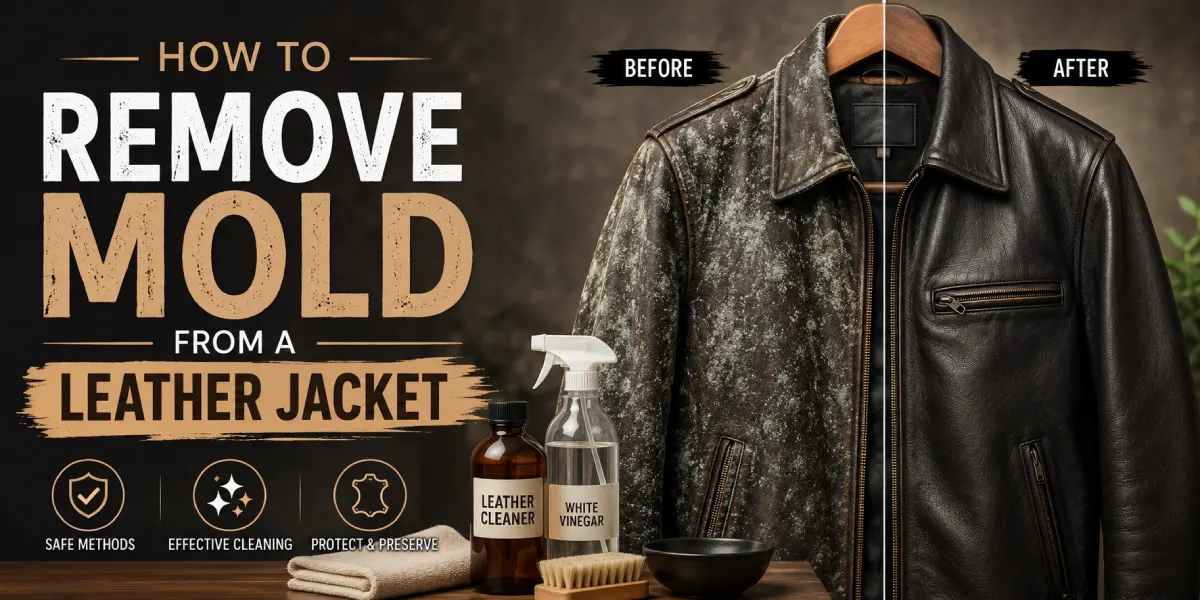
Finding fuzzy white or green spots on your favorite leather jacket is never fun. The good news: in most cases, you can fix it at home. You just need the right steps, in the right order. Here’s how to clean mold on leather without ruining it or breathing in spores you don’t want in your lungs.
Preparing for the Mold Cleaning Process
Leather is porous. That’s part of why mold grows on it, and it’s also why the wrong cleaning method can leave stains or stiff, cracked patches that are worse than the mold itself. A few minutes of prep now saves real damage later.
There’s a health side to this too. The CDC notes that mold exposure can cause a stuffy nose, coughing, wheezing, or skin irritation, and people with asthma or mold allergies may react more strongly. So is mold on leather dangerous? For most healthy people, brief contact while cleaning isn’t a major risk, but it’s still worth taking basic precautions. Don’t skip them just to save five minutes.
If your jacket needs a deeper refresh once the mold is gone, our leather jacket care guide is a good next stop.
Gathering the Right Supplies
You only need a few things:
- A soft-bristled brush
- Rubbing alcohol or a mild soap
- Water
- A couple of microfiber cloths
- Leather conditioner
Skip anything abrasive. No scrub brushes, no bleach, no all-purpose sprays. Leather punishes harsh products fast.
Setting Up a Safe Workspace
Take the jacket outside, or to a room with the windows open. Brushing mold loose sends spores into the air, and you don’t want that happening in your bedroom or closet. Lay the jacket flat on an old towel.
Put on a mask and gloves before you start. OSHA points out that mold cleanup can irritate the eyes, skin, nose, and throat, even in people without allergies. A basic dust mask and dish gloves are enough for a jacket-sized job.
Step-by-Step Mold Removal
Once you’re set up, the actual cleaning moves quickly. Don’t jump straight to liquid, order matters here.
Brushing Off Loose Mold Spores
Start dry. Before any liquid touches the jacket, brush the moldy spots gently with your soft-bristled brush. You’re lifting off the loose, fuzzy top layer first. Use light pressure and short strokes, brushing in one direction and away from your face.
This step alone removes a surprising amount of mold and makes the next step far more effective.
Wiping the Leather with a Cleaning Solution
Mix equal parts rubbing alcohol and water. If you’d rather skip alcohol, a few drops of mild soap in water work too. This is the core of how to get mold off leather for good, not just hide it.
Dampen a microfiber cloth in the solution and wring out the excess. Wipe the moldy areas gently in small sections. Don’t soak the leather, if liquid is dripping off your cloth, ease up. Test the solution on a hidden spot first, like an inside cuff, to check it won’t affect the dye.
This is also how to clean leather jackets with mold that’s set in a bit deeper, not just surface spots. For general dirt beyond mold, see our guide on cleaning a leather jacket at home.
Drying and Conditioning the Jacket
Let the jacket air dry away from direct heat. No hair dryer, no radiator, no heating vent. Heat pulls moisture out too fast and leaves leather brittle. A shaded, ventilated spot and a little patience is all it needs.
Once it’s fully dry, apply a leather conditioner. This isn’t optional, the cleaning solution strips some natural oils along with the mold, and conditioner puts moisture back so the leather stays flexible instead of stiff.
Notice any scuffs while you’re at it? Our scratch repair guide covers that separately.
Preventing Future Mold Growth
Removing the mold is half the job. Without a change in storage habits, it tends to come back, especially in humid climates.
Proper Storage Techniques
Never store leather in a sealed plastic bag. It traps moisture and creates exactly the damp environment mold needs. Use a breathable cotton garment bag instead, and a wide, padded hanger so the jacket keeps its shape.
Managing Closet Humidity
Mold needs moisture, so cutting humidity matters more long-term than any cleaner. Silica gel packets in your closet absorb excess moisture cheaply. A small dehumidifier helps if the space feels damp. Even leaving the closet door open now and then keeps air moving.
Noticed color changes too? Here’s why some leather jackets turn green. And if dye transfer has been an issue, check our guide on preventing leather jacket dye bleeding.
A moldy jacket feels like a loss in the moment. It usually isn’t. Once you know how to clean mold leather the right way, brush, solution, dry, condition, it’ll look like itself again.


 TRACK YOUR ORDER


