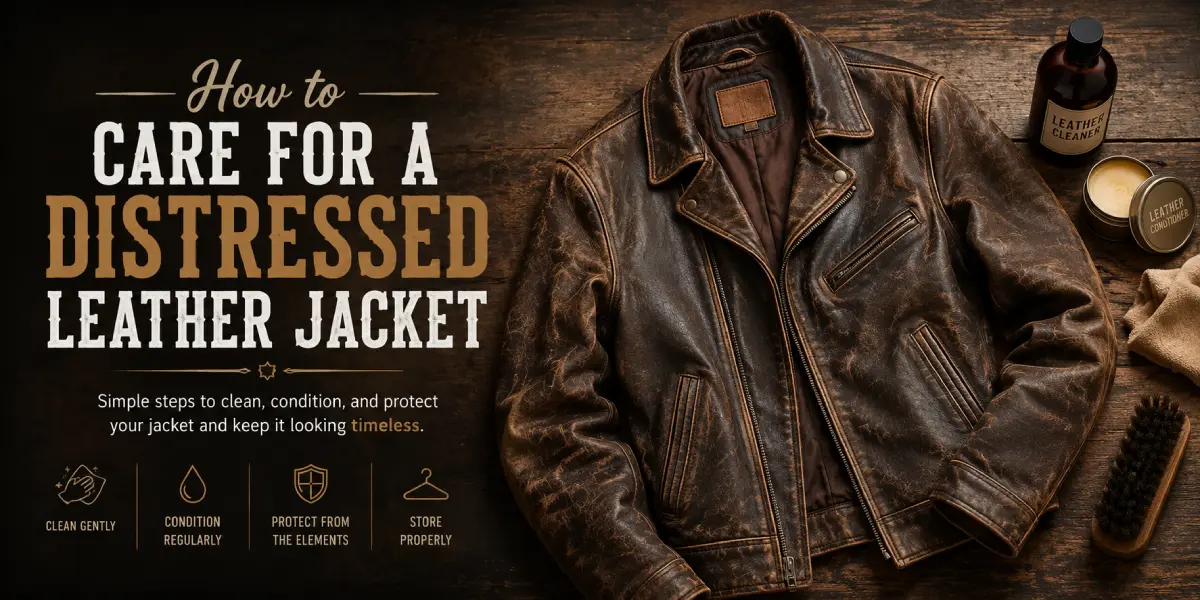
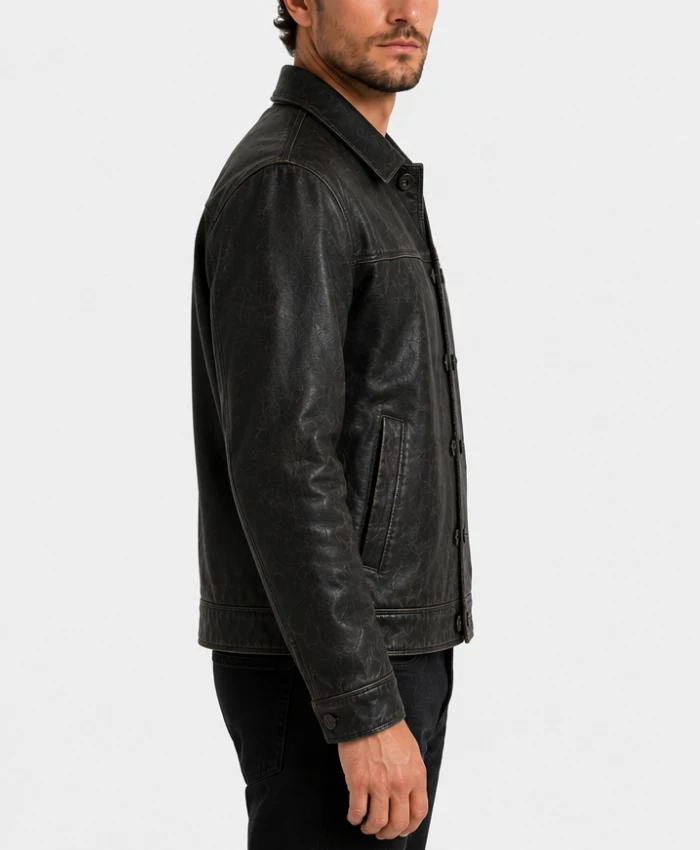
A distressed leather jacket is not the kind of piece you baby. That is part of its whole appeal. But there is a difference between a jacket that ages beautifully and one that just falls apart. The leather still needs moisture. It still needs cleaning. And it still needs to be stored correctly or you will ruin the very texture that makes it worth owning.
This guide covers everything you need to know, from daily upkeep to emergency fixes, written for anyone who owns a jacket worth protecting.
How to Clean a Distressed Leather Jacket (Without Ruining the Texture)
Distressed leather has already been through a process, whether that is physical abrasion, wax treatments, or natural aging over time. If you are curious about what that process actually involves, this piece on why it is called distressed leather explains it well. The point is, the surface texture is intentional. Harsh cleaning strips it away.
Removing Dust and Everyday Dirt
Most surface dirt does not need a product at all. A soft, dry microfiber cloth handles the majority of everyday buildup. Wipe in long, even strokes and pay attention to the collar, cuffs, and elbow creases where grime collects fastest.
If dust has settled into the grain, a very soft brush (a natural bristle paintbrush or a clean makeup brush) works well. Keep the motion light. You are not scrubbing; you are lifting.
Skip paper towels. They are rougher than they look and can drag across the surface in ways that dull the finish over time. Microfiber is always the safer choice.
Spot-Cleaning Stains the Safe Way
For anything beyond surface dust, the safest approach is also the simplest. Mix a few drops of mild dish soap into cool water, dip a cloth until it is barely damp (not wet), and work in small circles over the stain. Follow immediately with a clean, dry cloth.
A few things to avoid outright:
Baby wipes and makeup wipes. Many contain alcohol or fragrance that dry leather out fast.
Full soaking or submerging. Distressed leather cleaning should never involve running the jacket under water.
Heat to speed up drying. Set the jacket in open air at room temperature.
For oil-based stains like food grease, sprinkle a small amount of cornstarch or baking soda directly on the spot. Leave it for several hours. It draws out the oil before you wipe. Then spot-clean as normal.
Avoid scrubbing hard at old stains. If something has set deeply into the leather, a professional leather cleaner is a better call than aggressive home treatment. You can find a detailed breakdown of methods in this leather jacket cleaning guide.
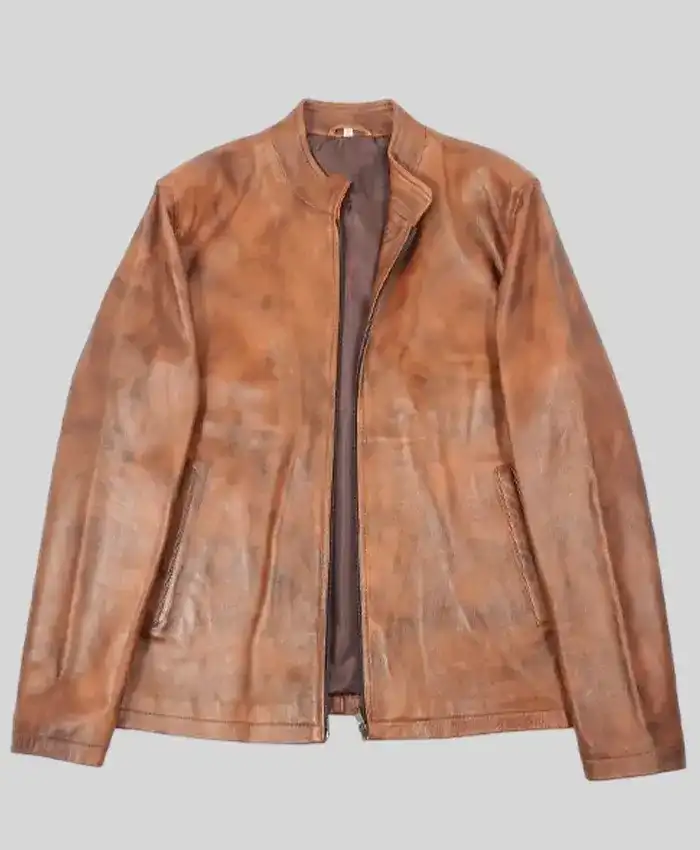
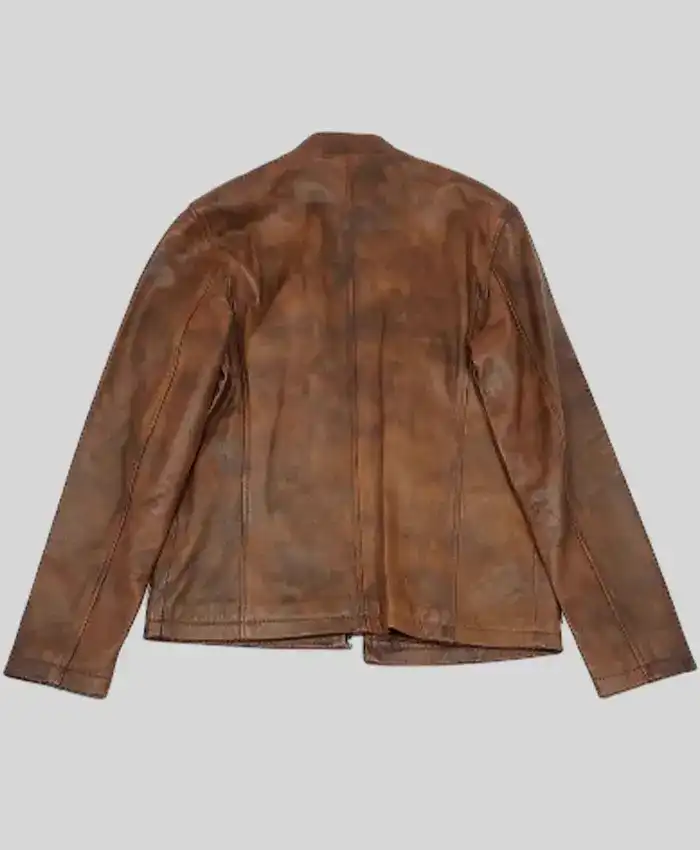
Buy Leather Distressed Jacket
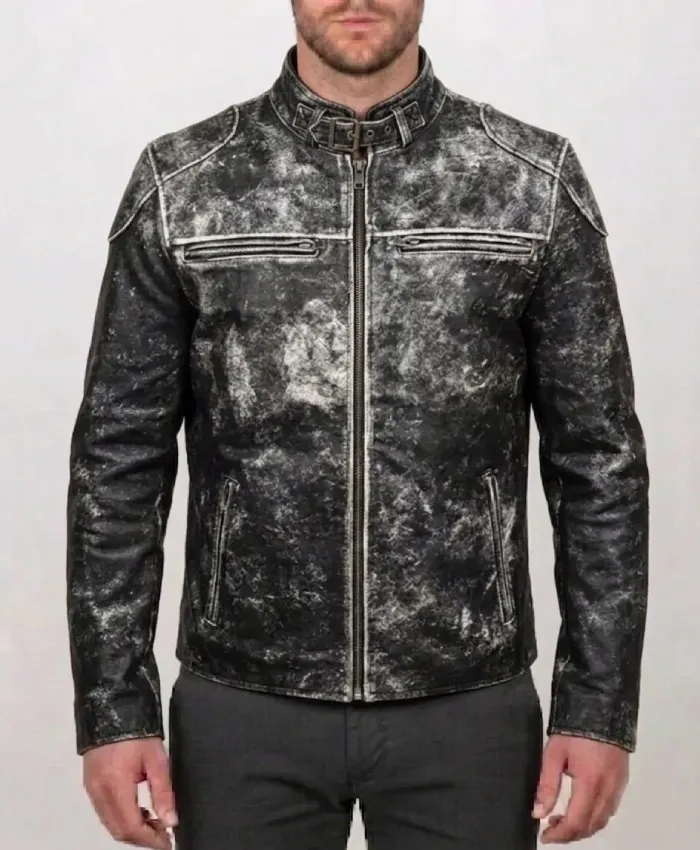
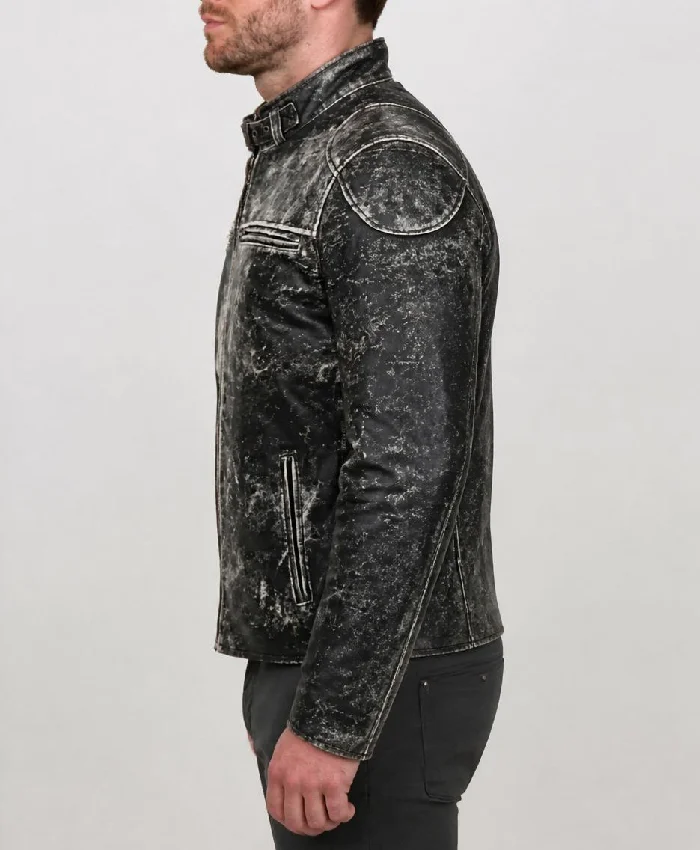
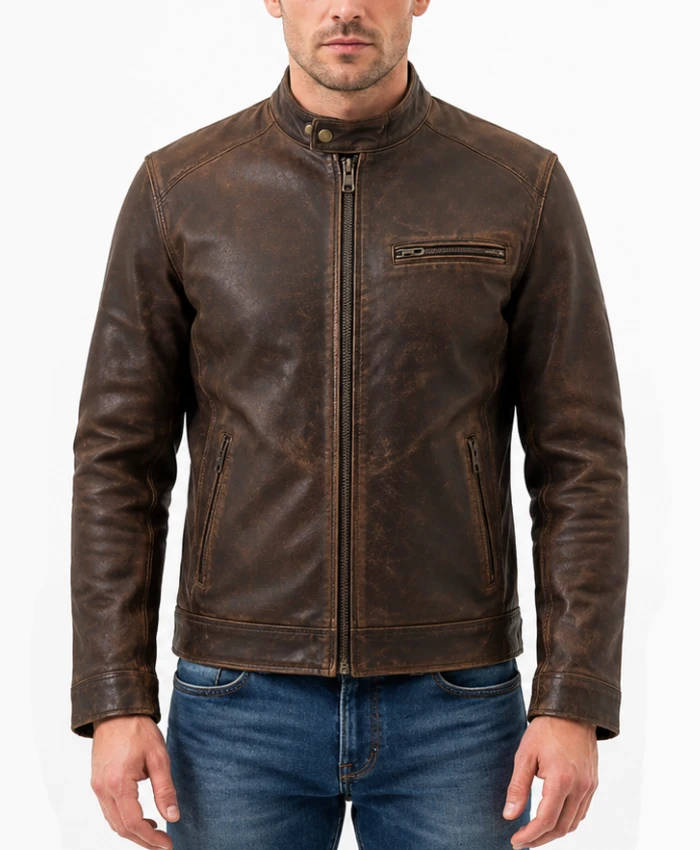
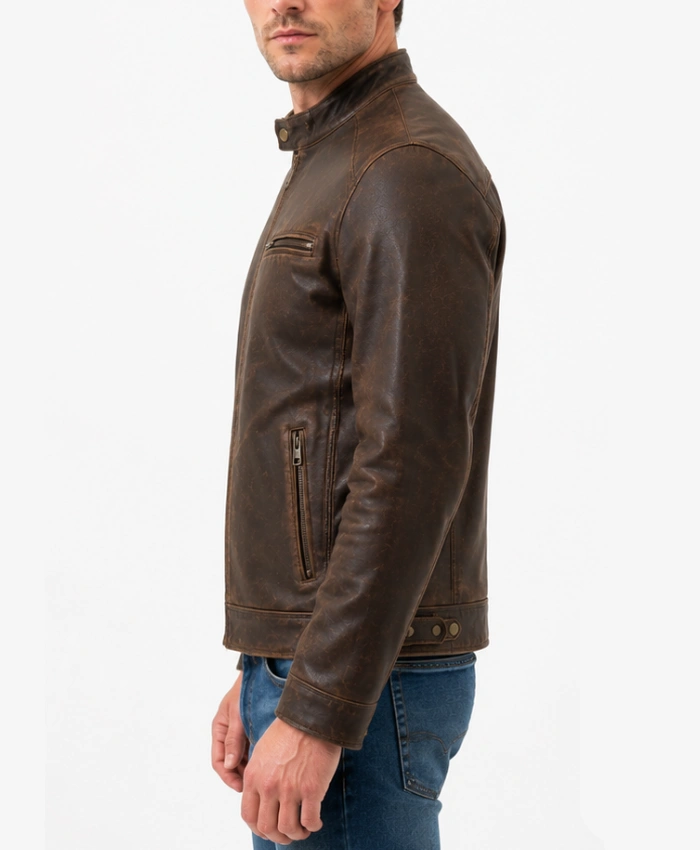
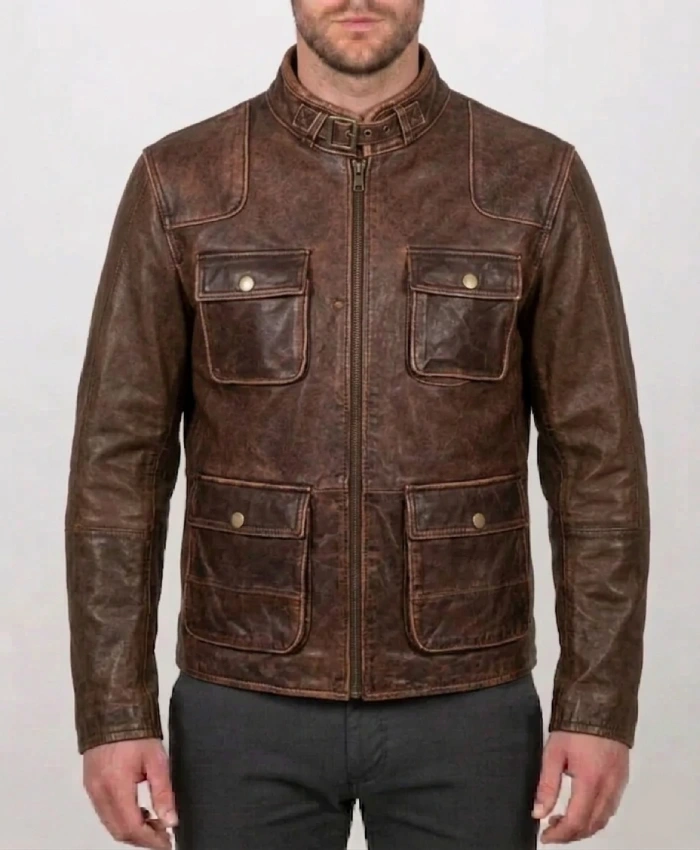
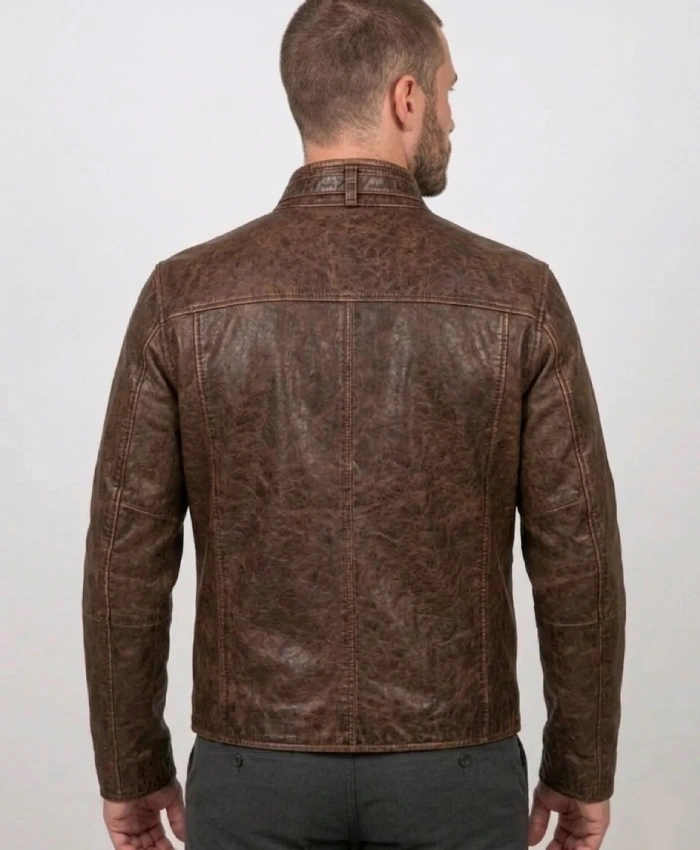
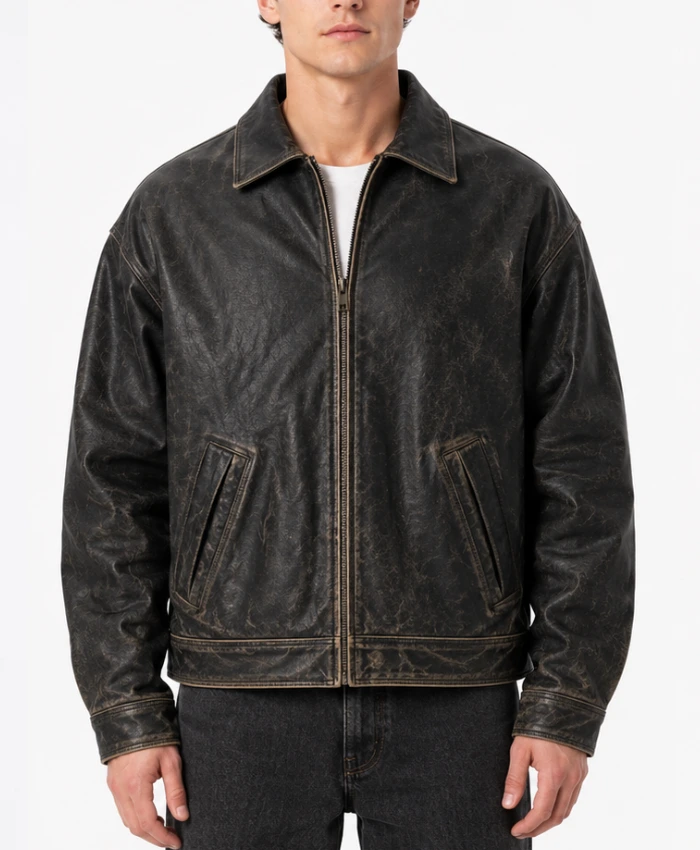
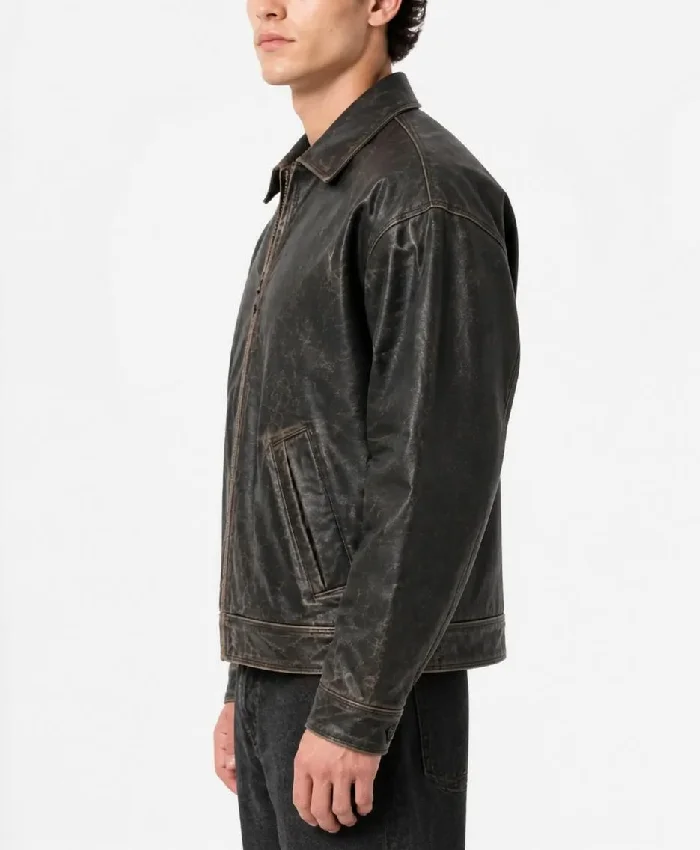
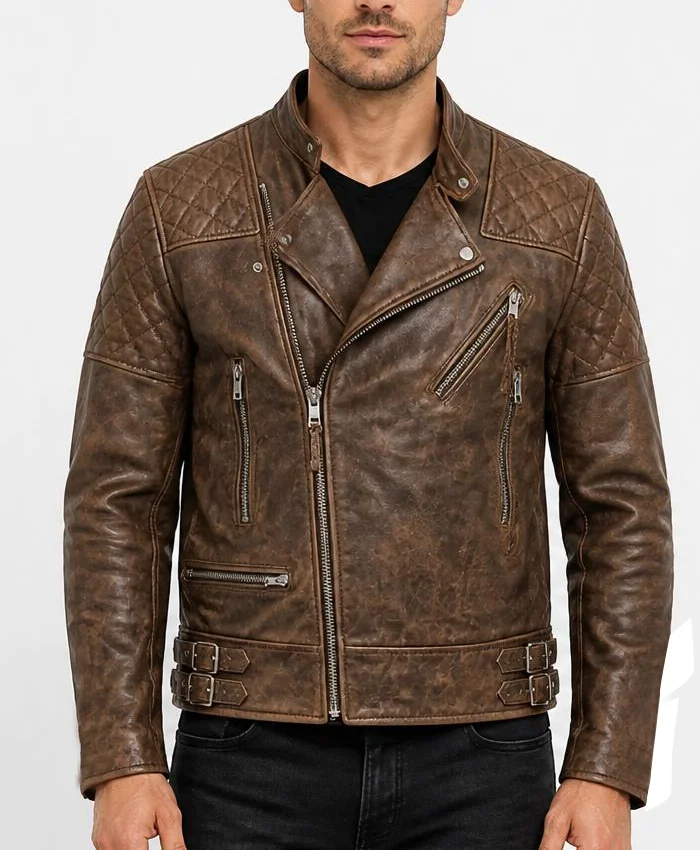
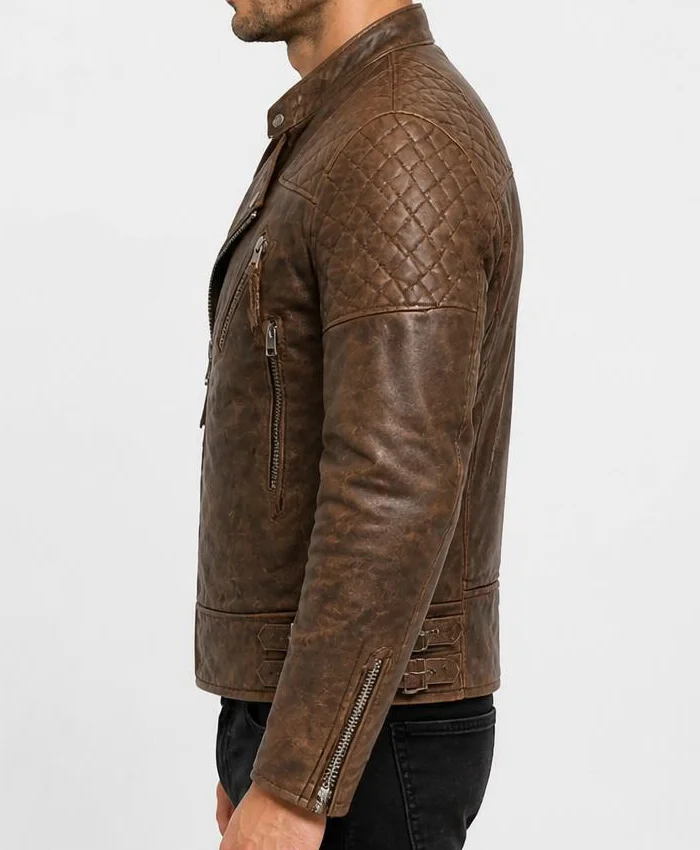
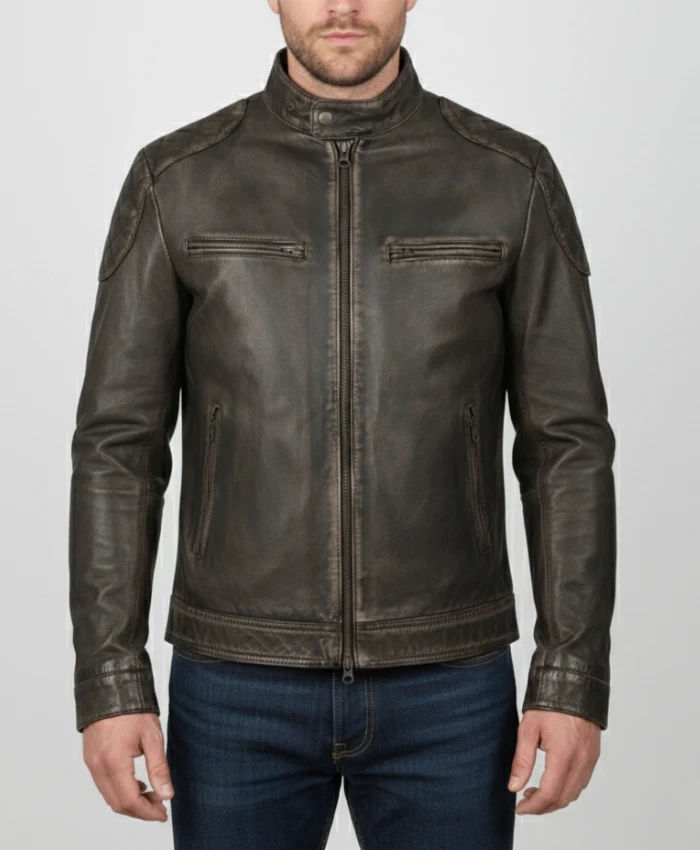
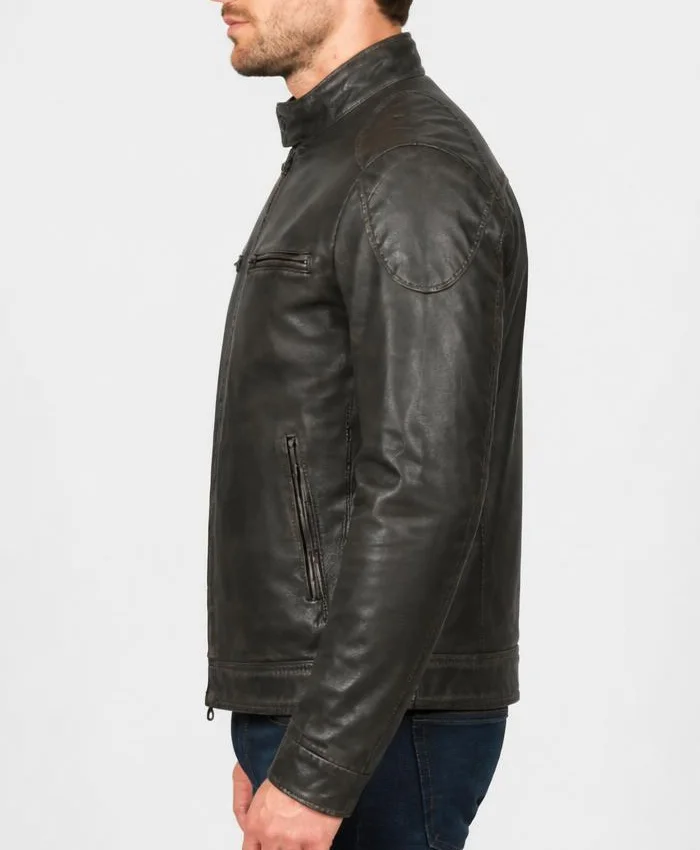
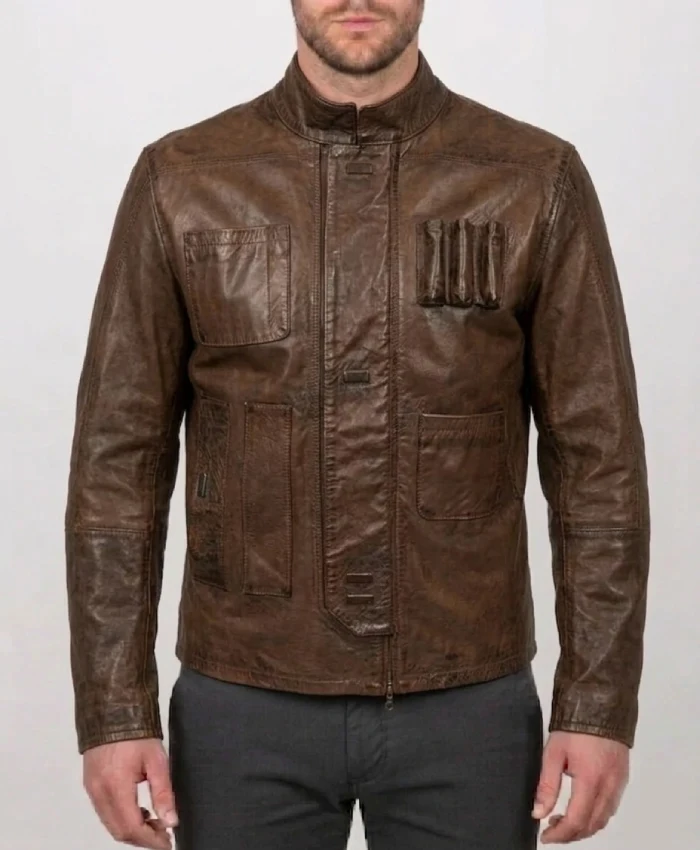
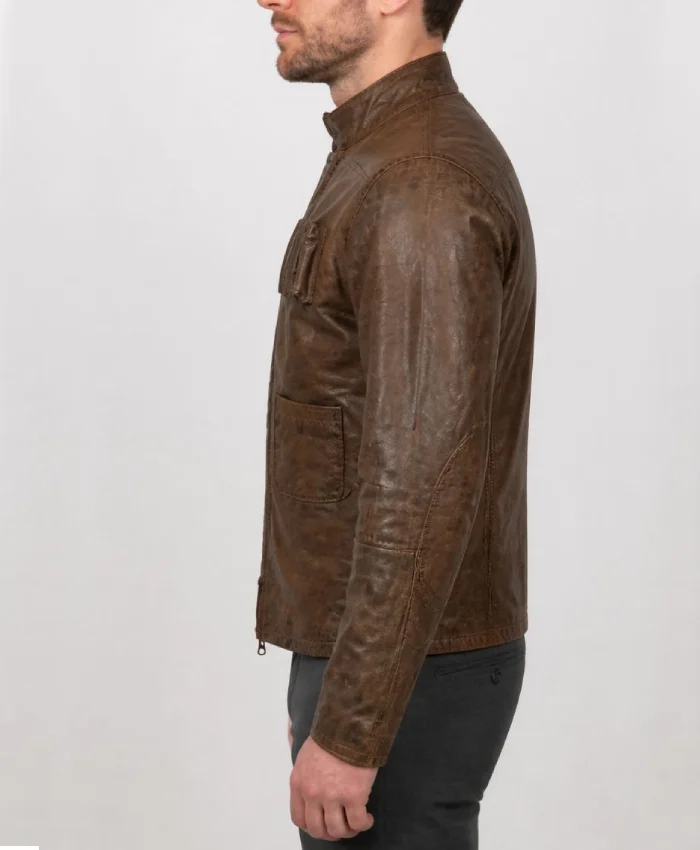
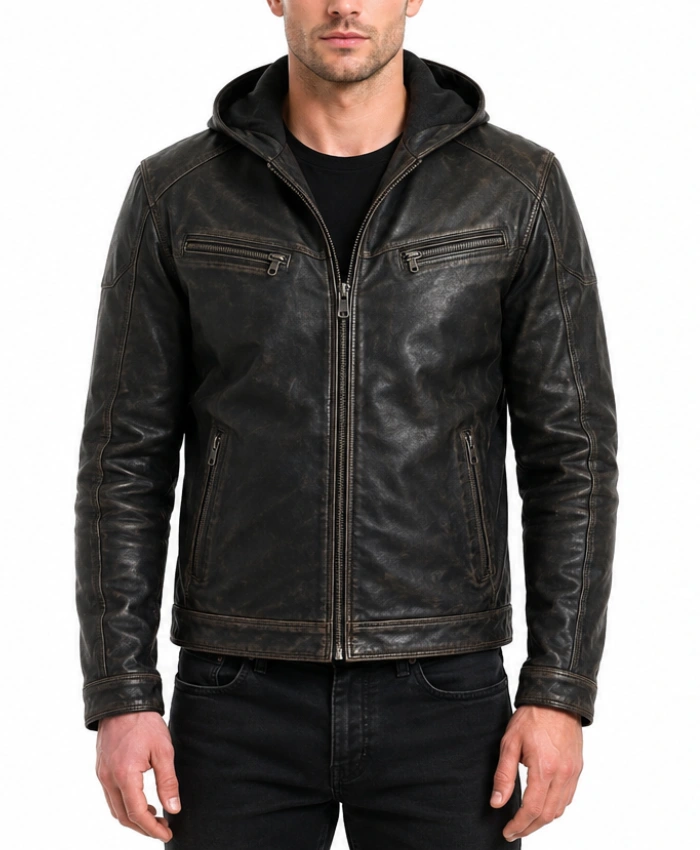
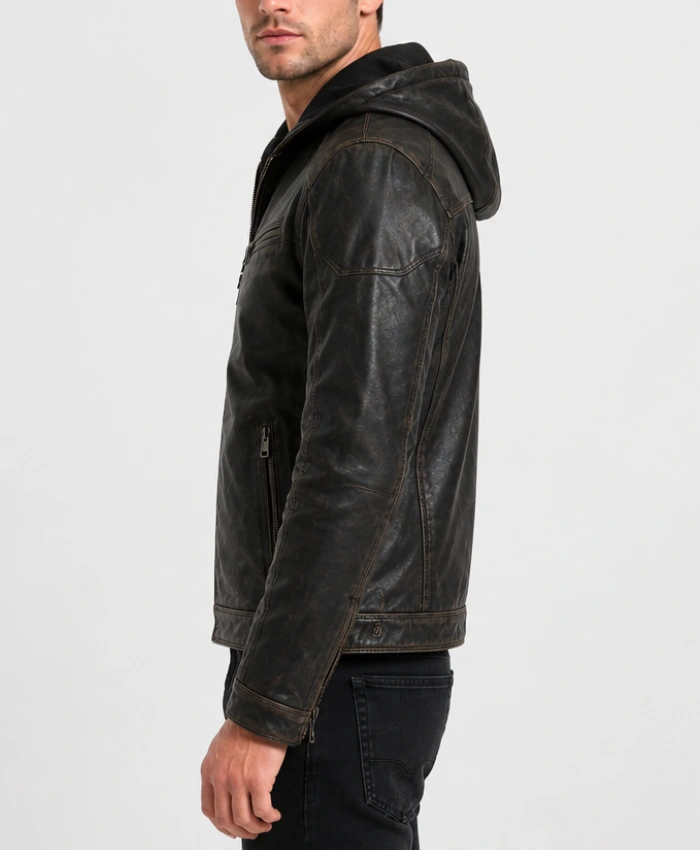
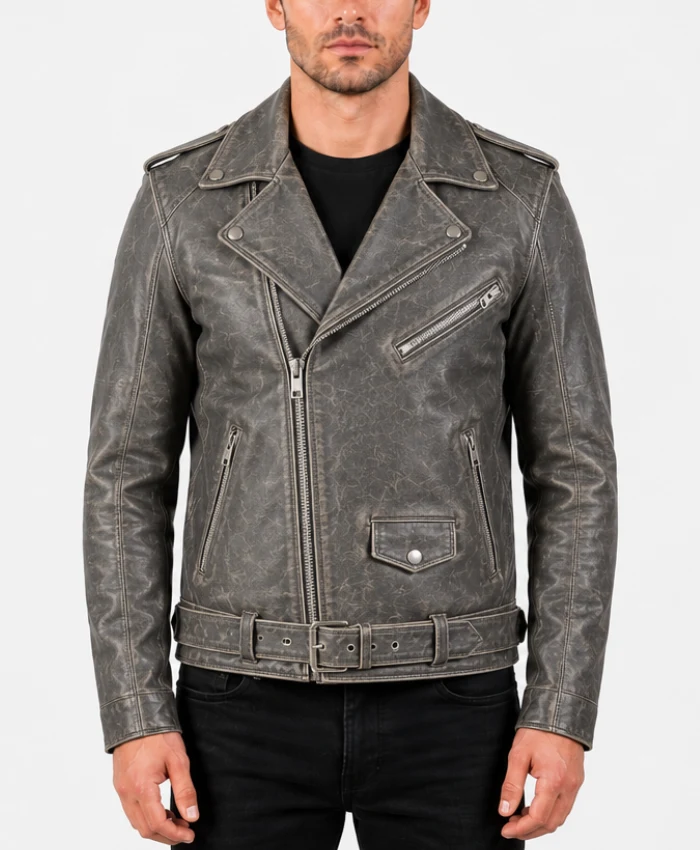
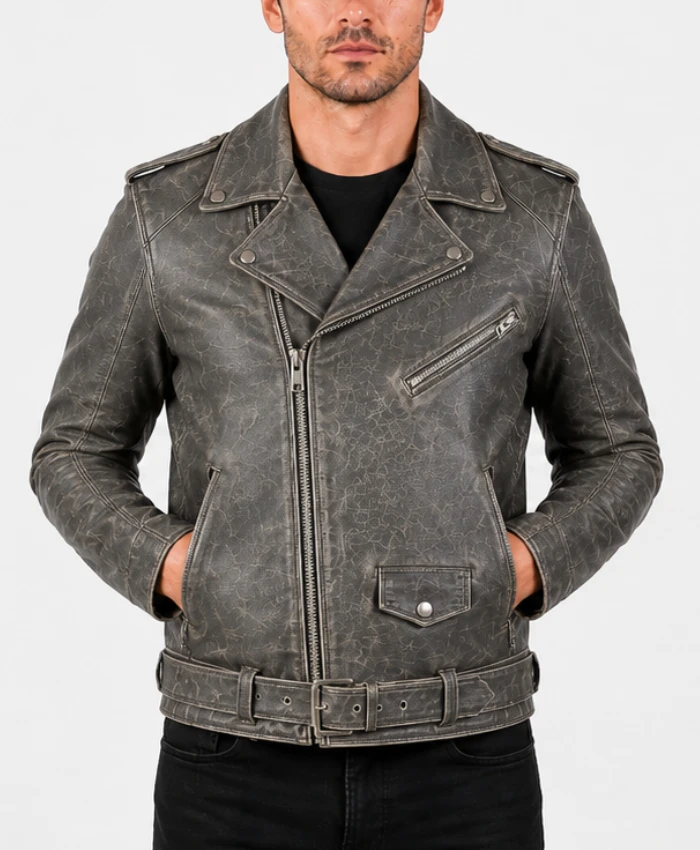
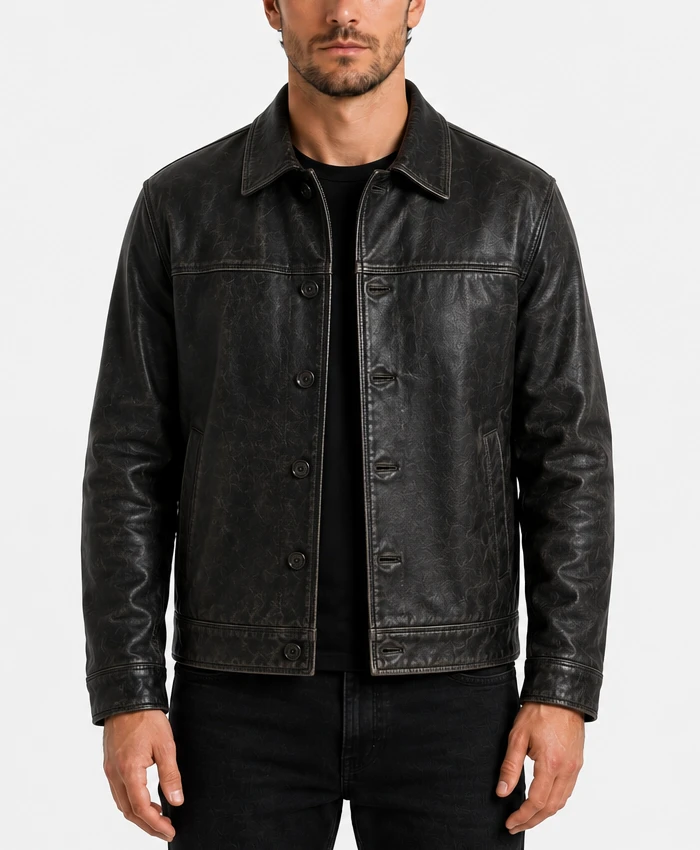
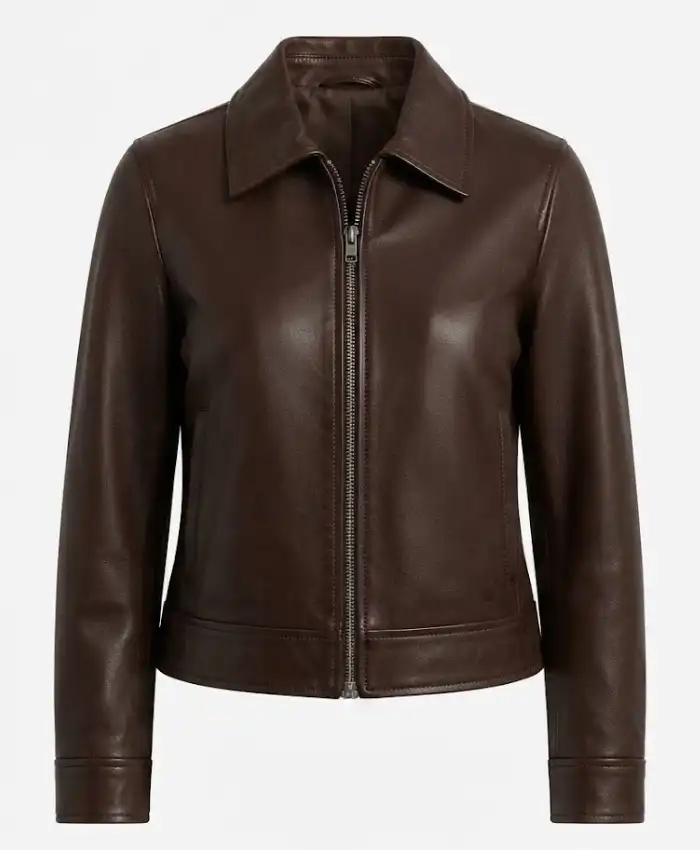
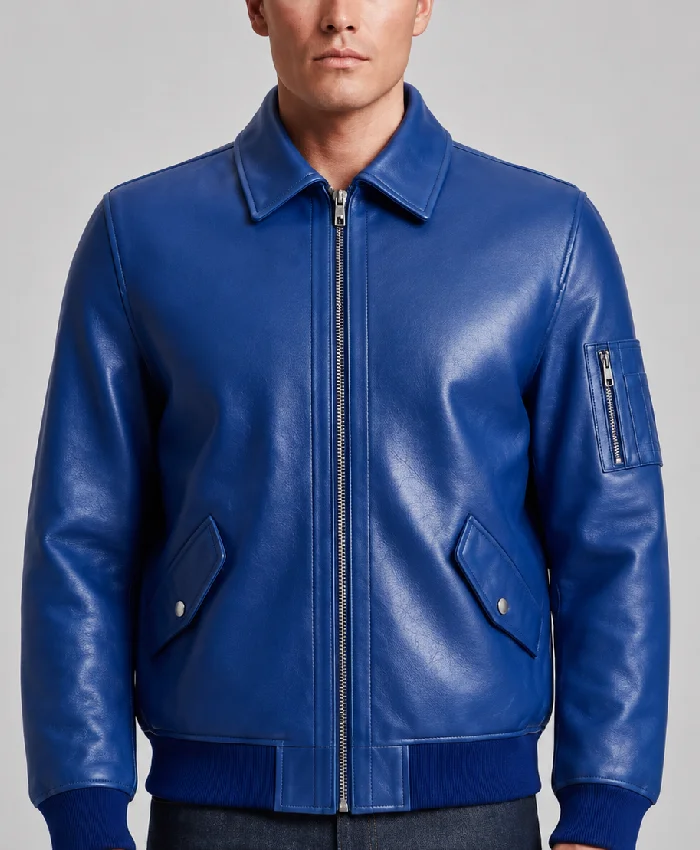
If you are shopping for reference while reading, the full range of mens distressed leather jackets is worth a look. The same care principles in this guide apply across the board, whether you pick up something new or are looking after a jacket you have owned for years.
$190.00Original price was: $190.00.$159.00Current price is: $159.00.
Conditioning Distressed Leather the Right Way
Distressed leather looks worn, but it still needs moisture to stay flexible. Without regular conditioning, the surface dries out and begins to crack. Those cracks are not the same as the intentional character marks that give the jacket its look. They are damage.
Best Conditioners to Use
Not all conditioners work the same way on distressed leather. A few reliable options:
Leather Honey Leather Conditioner is one of the most widely trusted products for jackets. It absorbs well and does not leave a greasy residue. Good for most full-grain and pull-up leathers.
Bick 4 Leather Conditioner is a lighter formula. It does not darken leather noticeably, which matters when you own a lighter brown piece and want to keep its current tone.
Mink oil is a traditional option. It conditions deeply but tends to darken leather, sometimes permanently. On a dark or black distressed jacket, that is usually fine. On brown or tan, test in a hidden area first.
Avoid anything silicone-based. Silicone products sit on top of the leather instead of absorbing, which clogs the pores over time and leads to cracking.
How Often Should You Condition It
Every three to six months is the standard guidance for regular wear. But a couple of other factors should drive your schedule more than a calendar reminder.
If the leather feels stiff when you flex it, condition it now. If it looks slightly faded or the surface seems dry to the touch, condition it. In dry climates or during winter months when heating systems strip moisture from indoor air, you may find every two to three months is more appropriate.
Conditioning too often is a real risk too. Over-conditioning leather makes it soft to the point of losing its structure. A jacket that started with a firm, rugged shape can become limp and misshapen. More is not better. Stick to need-based conditioning.
How to Apply It Correctly
Clean the jacket before conditioning. Applying product over dust or debris just traps it in the leather.
Put a small amount of conditioner on a soft cloth, never directly onto the jacket. Work in slow, circular motions across the entire surface, including the areas under the collar, along seams, and inside any folds where dryness builds up first.
Let it sit for several hours, ideally overnight. The leather will drink in what it needs. After that, wipe off any excess with a clean dry cloth. If the jacket still looks slightly dry in spots, apply a second coat only to those areas.
For a full care and maintenance routine that covers more than just conditioning, this leather jacket care and maintenance page is a helpful reference.
Storing Your Jacket to Prevent Damage
How you store a distressed leather jacket matters as much as how you clean it. The wrong storage conditions can cause more damage in a single off-season than years of regular wear.
Ideal Temperature, Humidity and Light
The sweet spot for storing leather is a room temperature between 60°F and 70°F (15°C to 21°C), with humidity levels between 40 and 50 percent. Both extremes cause problems.
Too much humidity and you get mold. It grows quickly on leather, especially when a jacket sits in a closed closet for months without airflow. Too little humidity and the leather dries out and eventually cracks.
A $10 digital hygrometer tells you exactly what conditions your closet is holding. Silica gel packs or a small closet dehumidifier can regulate moisture if needed.
Keep the jacket away from windows and direct light. UV exposure fades leather and dries it out. An interior closet on a wall away from the exterior of the house is usually your best storage spot.
Hanging vs Folding for Shape Retention
Always hang a leather jacket. Folding it compresses the leather at the fold lines and over time those creases become permanent. A jacket stored folded for a full season may come out with permanent crease marks across the chest or sleeves.
Use a wide, padded hanger. Wire hangers and narrow plastic ones create pressure points at the shoulders that stretch the leather. Since leather is heavy, a thin hanger over several months will leave visible shoulder deformation.
Do not use plastic garment bags for long-term storage. Plastic traps moisture and prevents air circulation, which is a perfect setup for mold. Use a breathable cotton or canvas dust cover instead.
Common Mistakes and Emergency Fixes
Even with good habits, things go wrong. Here is how to handle the most common problems.
What to Do If It Gets Wet
Rain happens. A wet distressed leather jacket is not ruined, but what you do in the next few hours matters.
First, do not put it near a heat source. No hair dryers, radiators, or sunny windowsills. Heat dries leather too fast and causes it to stiffen, shrink slightly, or crack.
Shake off excess water and hang the jacket on a wide hanger in a well-ventilated area at room temperature. Stuff the sleeves lightly with clean cloth or newspaper if you want to help it hold its shape while drying.
Once it is fully dry (this can take 24 hours depending on how wet it got), apply a leather conditioner. Water pulls moisture from the leather as it evaporates, so conditioning after rain is not optional.
Preventing Musty Smells and Mold
A musty smell is usually an early mold warning. If you catch it before you can see visible growth, act quickly.
Hang the jacket in fresh air outdoors, in the shade. Direct sunlight helps kill mold but will also fade and dry the leather, so shade is the better option. Leave it out for a few hours.
For surface mold you can see, mix equal parts distilled water and white vinegar. Apply lightly with a soft cloth, wipe the affected area, then let the jacket air dry completely before conditioning.
Prevention is easier than treatment. Always clean your jacket before storing it at the end of a season. Sweat, body oils, and food residue are exactly what mold feeds on. A clean jacket stored in a breathable bag with a silica gel pack has very little risk of developing mold.
Do not pack jackets tightly against other clothing in your closet either. Airflow around the jacket is one of the simplest and most effective forms of mold prevention.
About Author:
Caleb Norton is an experienced leather industry writer with over five years of expertise in product care, durability, and modern style guidance.













 TRACK YOUR ORDER


