Distressed leather has a pull that polished, pristine leather simply can’t match. There’s something about that worn, rugged surface, the uneven color, the visible grain, the slight roughness under your fingers, that makes it feel like the piece has lived a life before it reached you. But what exactly is it? And more importantly, how do you know if you’re getting the real thing?
This guide covers everything: the definition, how it’s made, the different types, what it looks and feels like, and how to keep it in good shape for decades.
What Is Distressed Leather?
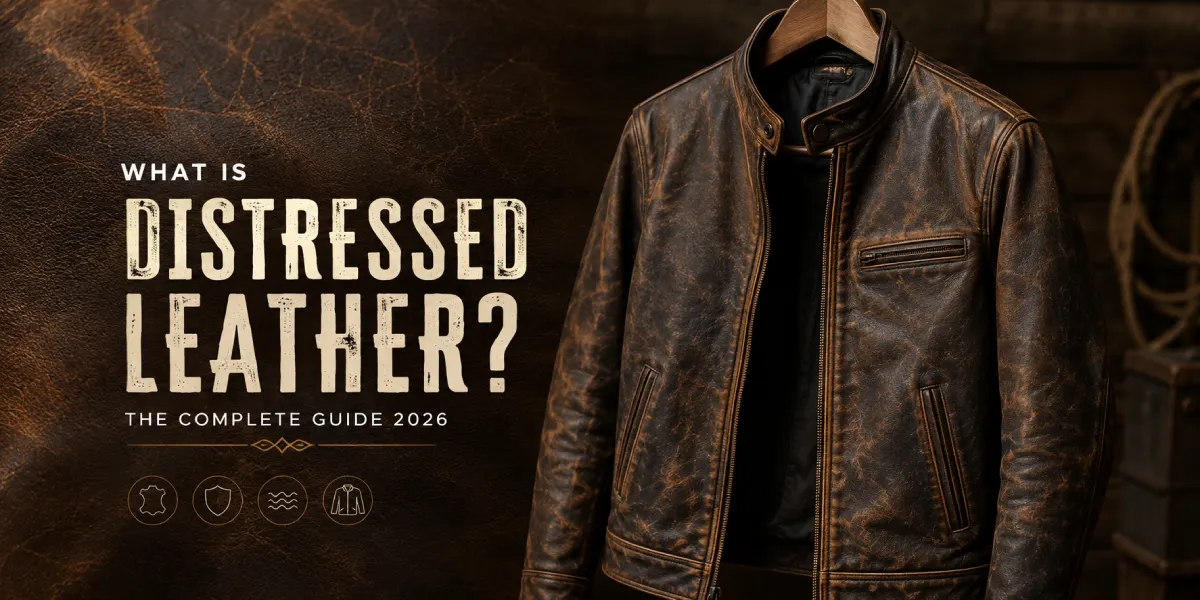
Distressed leather is leather that has been intentionally treated to look aged, worn, and weathered. The scratches, uneven coloring, and visible grain patterns are not flaws, they’re the entire point.
Craftsmen and tanneries use a combination of mechanical and chemical techniques to give the hide a “lived-in” look that would normally take years of regular use to develop. The result is leather that feels broken-in from day one, carries visual character that smooth leather lacks, and actually becomes more attractive over time rather than looking worse.
The term covers a broad range of finishes. Some distressed leather looks lightly worn, with subtle color shifts. Other versions look like they’ve survived a decade on a motorcycle. The common thread is that the surface has been treated to show, not hide, the natural imperfections of the hide.
How It Differs from Regular Leather
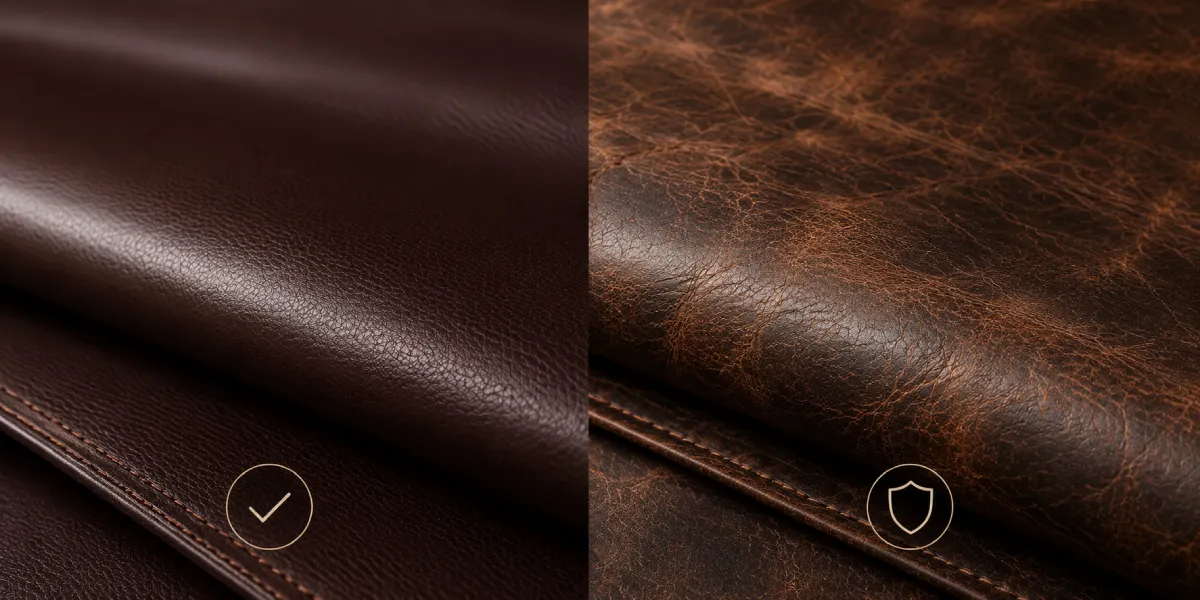
Regular leather, in most commercial products, goes through a finishing process designed to hide imperfections. The surface gets sanded, buffed, and coated with pigments or lacquers to produce a uniform, smooth leather appearance. The result is consistent color, a glossy finish or semi-matte sheen, and a surface that looks clean and new.
Distressed leather works in the opposite direction. Instead of covering the hide’s natural markings, old scars, grain variations, wrinkles- the distressing process brings them forward. The surface is intentionally given color variation, micro-abrasions, and texture that polished leather deliberately removes.
In practical terms of Distressed Leather Jacket vs Regular Leather Jacket: if you run your hand across polished leather, it’s smooth and even. Run your hand across distressed leather, and you feel the grain, slight irregularities in the surface, and a texture that’s closer to raw material. The visual experience is the same; one looks factory-new, the other looks like it has history.
Is Distressed Leather Real Leather?
Yes, high-quality distressed leather is absolutely genuine leather. In fact, the best distressed leather products are made from full grain leather, which is the highest grade available. Full grain comes from the outermost layer of the hide, with all the natural grain intact. Nothing is sanded away or corrected. This makes it the most durable grade and the one that develops the most authentic-looking patina over time.
Top grain leather is also commonly used for distressed finishes. It’s taken from the same upper layer of the hide but gets a light sanding pass to even out imperfections before distressing begins.
What you want to avoid is something labeled “genuine leather” being passed off as distressed. Genuine leather is actually the lowest commercial grade, it comes from leftover hide layers bonded together, and it doesn’t age or distress the way full grain or top grain does. It tends to crack, peel, and deteriorate rather than develop character.
If a product claims to be distressed leather but the price seems too low and the surface looks perfectly uniform, it’s worth looking closer. Real distressed leather has variation, no two pieces look exactly the same.
How Is Distressed Leather Made?
The process of creating distressed leather has changed significantly since it first appeared commercially in the 1960s, when craftsmen used basic physical methods like crinkling and beating hides with rocks. By the 1970s, chemical techniques entered the process. By the 1990s, tanneries had developed systematic methods that produced consistent, repeatable results at scale. Today, some facilities even use robotic systems to apply patina, a development documented in research published in The International Journal of Advanced Manufacturing Technology.
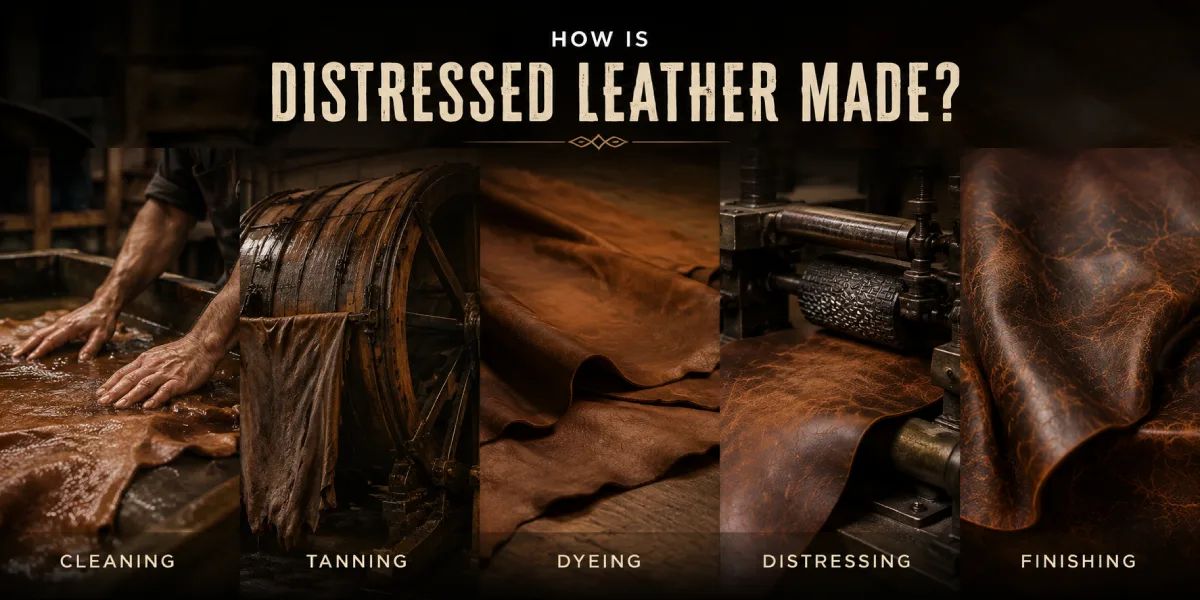
The core process still starts the same way: a cleaned animal hide is tanned to preserve the leather and enhance its durability, then dyed, and then subjected to one or more distressing treatments.
Mechanical Distressing Techniques
Mechanical distressing physically alters the leather’s surface. The most common methods include:
Crinkling and crumpling: the hide is folded and compressed repeatedly to create natural-looking crease lines Tumbling: hides are placed in large rotating drums, which softens the fibers and creates an all-over worn texture Brushing: wire or nylon brushes are dragged across the surface to raise the grain and create subtle scuffing Sanding: targeted sanding removes small amounts of surface material to create lighter worn patches, especially at edges and high-contact points
These methods are most effective on full-grain leather because the hide’s natural structure is intact. The fibers respond to physical treatment in a way that lower-grade leather can’t replicate.
Chemical Aging Methods
Chemical methods control how color sits on the leather and how the surface reacts to handling. Common approaches include:
Aniline dyes: transparent dyes that penetrate into the hide rather than coating the surface. This allows natural variations in the leather to show through, which is essential for the distressed look
Acetone treatment: applied in controlled amounts to fade and break down the surface dye, creating lighter patches and a stripped-back appearance
Wax finish: a layer of pigmented wax is applied and then worked unevenly across the surface, creating depth and variation
Oil tanning: the hide is saturated with natural oils during the tanning stage itself, which softens the leather and makes it more responsive to developing patina with use
These chemical treatments don’t just affect appearance. Oil-treated and wax-finished distressed leather is generally more water-resistant and more supple than untreated hides.
Handmade vs Factory Distressing
There’s a meaningful difference between artisanal leather distressing and industrial production.
In small workshops and traditional tanneries, craftspeople apply dyes and waxes by hand, using cloths, brushes, and their own judgment about where to apply more pressure or color. The result is leather where every piece is genuinely unique, the patina leather finish has real variation because a person made it, not a programmed machine.
Factory distressing, by contrast, uses automated systems to apply treatments consistently across high production volumes. The visual result can be very similar, but the structural variation of true hand distressing is absent. Industrial distressing is not inferior per se, it simply means you’re getting a reliably consistent product rather than something one-of-a-kind.
For buyers, the distinction matters if authenticity and uniqueness are priorities. Artisanal distressed leather costs significantly more and production is limited. Factory-distressed leather makes the aesthetic accessible at a wider range of price points
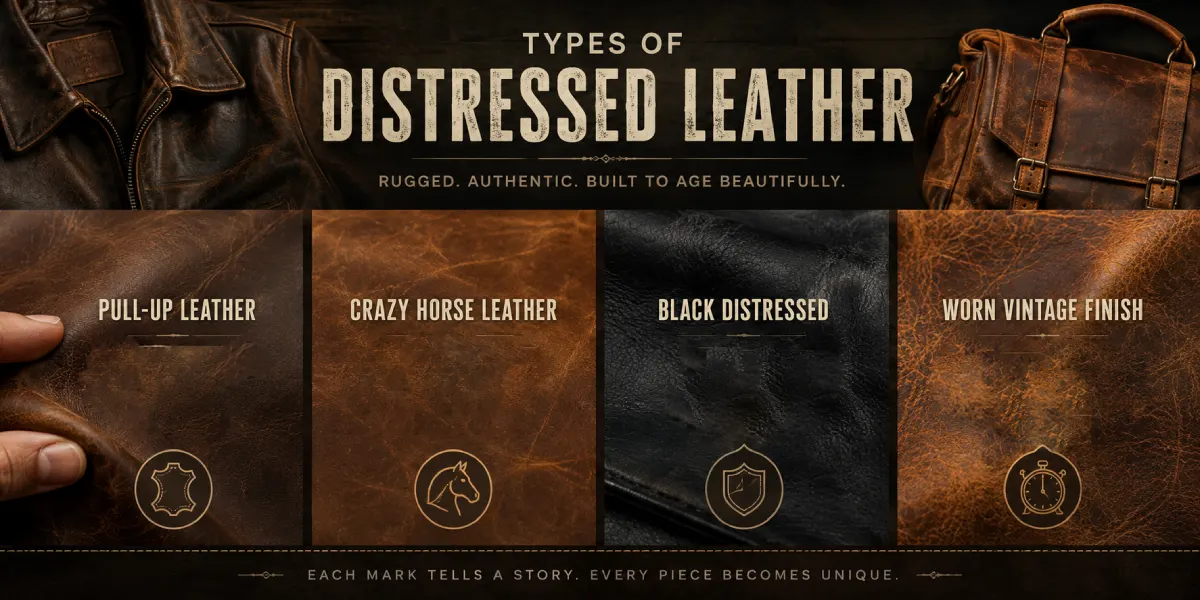
Distressed leather isn’t a single material, it’s a broad category with several distinct types, each made differently and suited to different uses.
Pull-Up Leather
Pull-up leather is probably the most well-known type. It’s made by infusing full grain leather with natural oils and waxes during the tanning process. The defining characteristic is the color lightening effect, when you stretch, bend, or press the leather, it visibly lightens in those areas. The oils and waxes shift under pressure, revealing a lighter shade beneath.
This isn’t a defect. It’s the signature of pull-up leather, and it’s what makes the material so visually interesting. Over time, handled areas develop their own tone and character, meaning your jacket or bag gradually becomes a record of how you’ve used it.
Pull-up leather is sometimes called waxed leather or oiled leather, depending on which treatment is dominant. The leather-dictionary.com notes that pull-up leather can be either sanded (nubuck base) or unsanded (aniline base), with sanded versions developing patina faster and more dramatically.
It’s a practical material too, the oil and wax treatment provides natural resistance to light moisture and minor abrasions.
Crazy Horse Leather
Crazy Horse leather is a specific type of distressed finish built on full grain, vegetable tanned leather. The name has nothing to do with horses — it refers to a treatment process in which the hide is worked with special waxes to produce a distinctive two-tone, matte appearance.
The vegetable tanning process is crucial here. Unlike chrome-tanned leather, vegetable tanned hides can absorb oils naturally and develop a genuine patina over time. When Crazy Horse leather is scratched or pressed, the wax moves and a lighter mark appears, which then slowly blends back into the overall tone as the leather warms up.
This makes it one of the most rugged leather finishes available. Scratches and scuffs that would damage a polished surface actually add to the Crazy Horse look rather than detracting from it. It’s commonly used in bags, belts, and sturdy accessories where wear is expected and welcome.
Whiskey, Black & Worn Vintage Finish
Beyond pull-up and Crazy Horse, distressed leather comes in a range of color-specific finishes that describe both the hue and the distressing style:
Whiskey distressed leather, warm amber to caramel tones with visible variation between darker grain lines and lighter surface areas. The color mimics the effect of years of sun and handling on natural tan leather. It’s popular in bags, wallets, and belts where the shifting tones are a key part of the design.
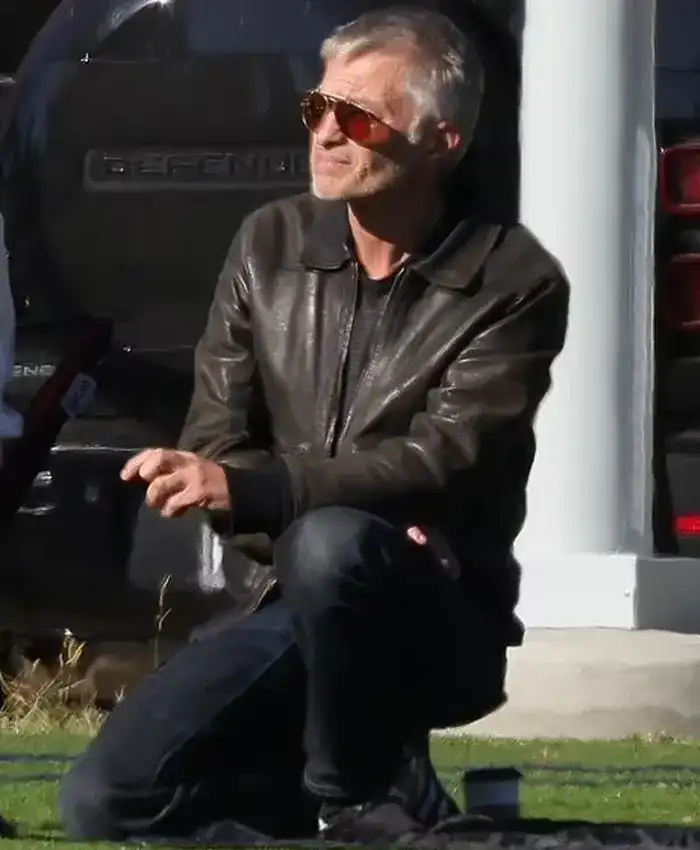
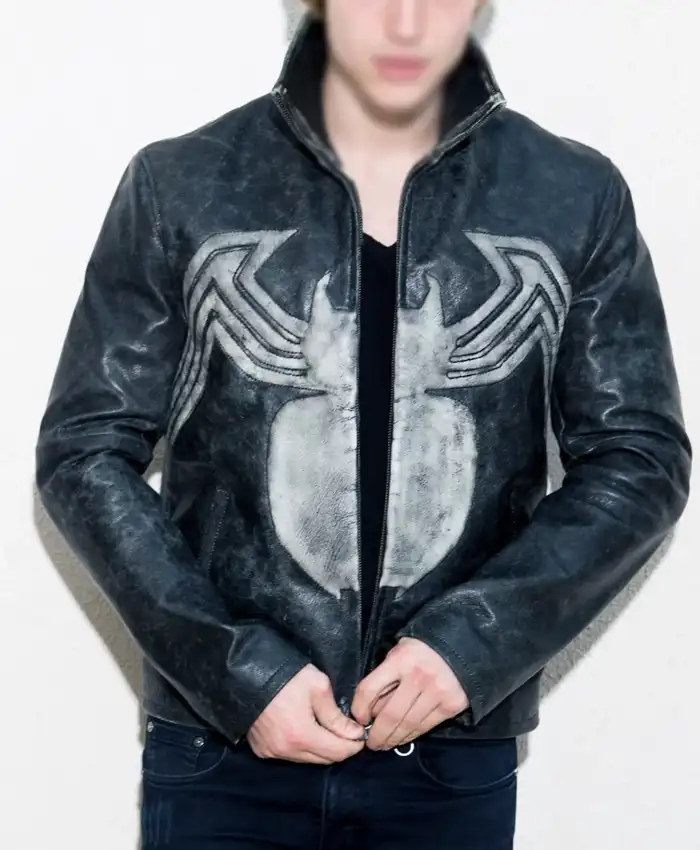
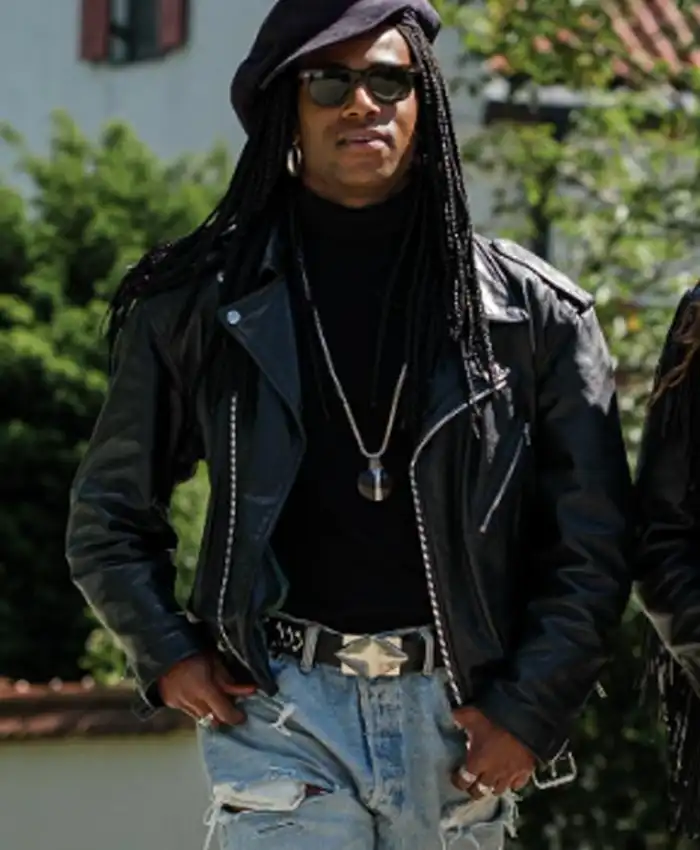
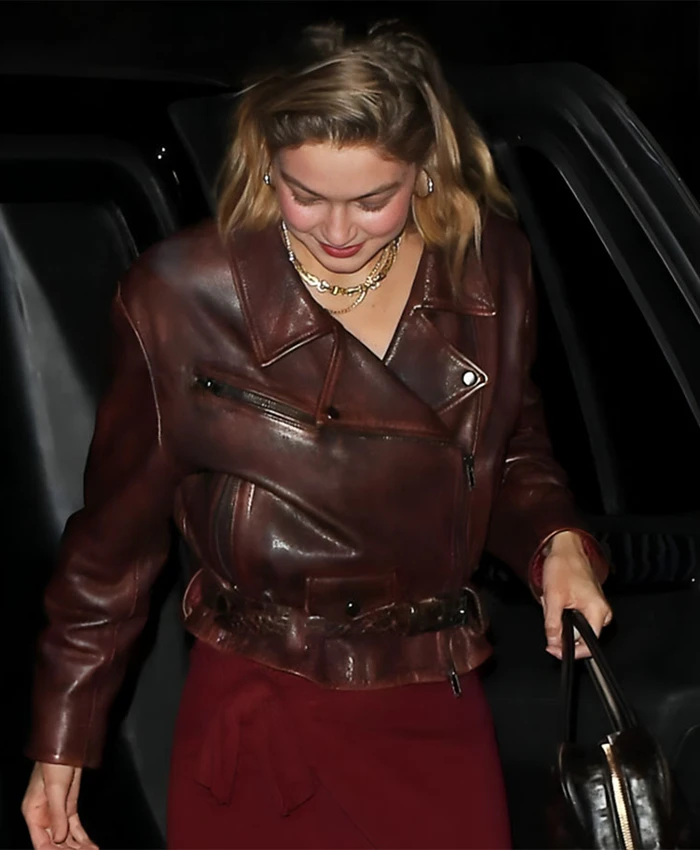
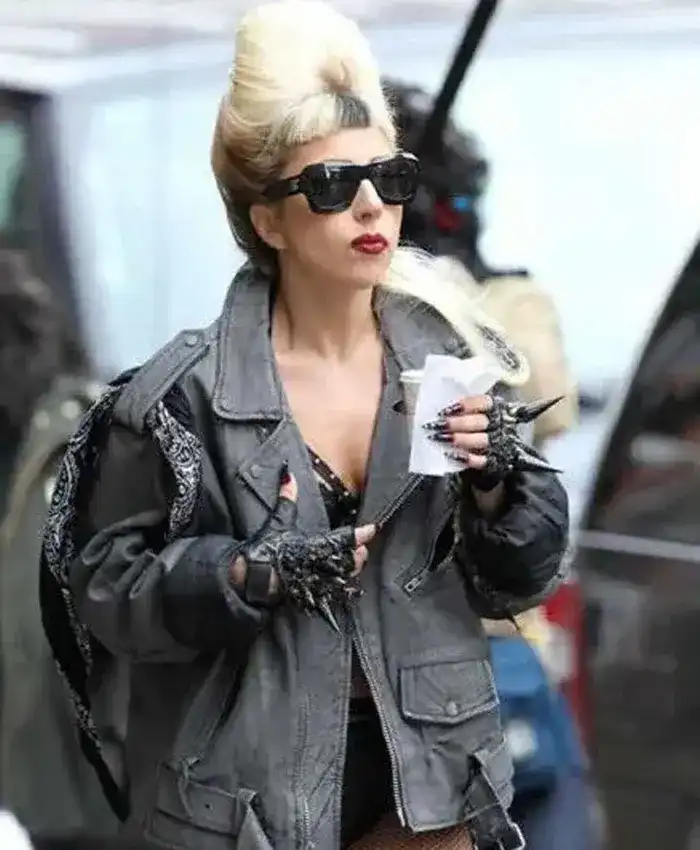
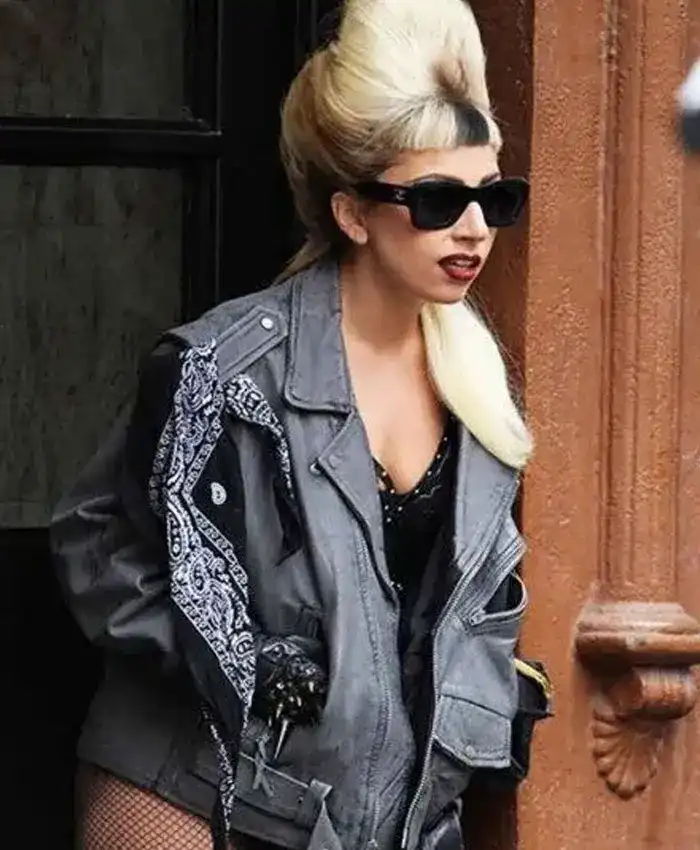
Black distressed: a dark base finish with gray or charcoal lightening at flex points and edges, typically achieved through wax or oil applied over a dark dye. What are distressed leather jackets in black? Largely this, a jacket that looks like it’s been through something, with character worn into every panel rather than a flat, uniform black.
Worn vintage finish: lighter tan or brown hides with deliberate scuffing, creasing at natural flex points, and color variation designed to mimic decades of honest use. This finish sits closest to the antique leather aesthetic, leather that looks like it was found in someone’s attic, not a store shelf.
What Does Distressed Leather Look & Feel Like?
Understanding the visual and tactile qualities of distressed leather helps both when buying and when evaluating whether a product is genuinely well-made.
Visual Characteristics: Texture, Color & Patina
The weathered appearance of distressed leather comes from several overlapping elements working together:
Color variation is the most immediately obvious. Unlike smooth leather, which aims for uniform color across the entire surface, distressed leather has lighter areas and darker areas, sometimes dramatically so. Edges tend to be darker. Areas that flex tend to be lighter. This isn’t inconsistency; it’s the visual signature of the material.
Natural grain is visible and prominent. The surface shows the actual texture of the original hide, pores, grain lines, and any healed scars the animal carried. High-quality distressed leather celebrates these marks rather than hiding them under a coating.
Worn-in look is achieved through micro-abrasions on the surface that catch light differently from the surrounding leather. Under bright light, distressed leather almost seems to have depth, shadows and highlights within the surface itself.
The overall impression is of something that has been used, handled, and lived with. The aesthetic is deliberate and specific. It’s the opposite of the bright, even look of new polished leather.
How It Ages Over Time
This is where distressed leather genuinely earns its reputation. Unlike cheaper leather materials, which crack, fade, and deteriorate with age, properly made distressed leather improves with time.
Leather patina is the natural change in color and surface that happens as the leather absorbs oils, responds to handling, and reacts to its environment. On full grain distressed leather, patina develops in layers, new depth of color in worn areas, a slight sheen in spots that get regular contact, and a gradual darkening or lightening depending on the finish type.
With care, a quality piece of distressed leather, a jacket, bag, or pair of boots, can last 20 or more years. The character it develops along the way makes it more valuable, not less. This is the reason people hand down leather goods rather than throwing them away: the object develops character that can’t be replicated.
How to Care for Distressed Leather
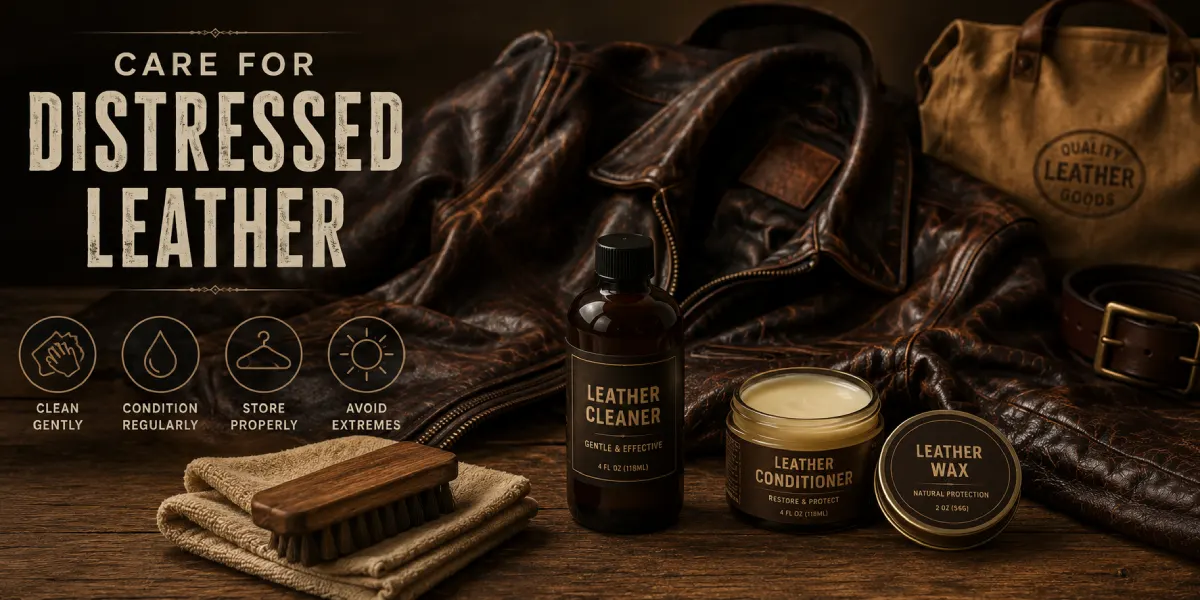
Distressed leather is not high-maintenance. But it does need the right kind of attention. The key is understanding that the finish is open and absorbent, you’re not working with a sealed, coated surface. What you apply to it matters.
For regular cleaning, a soft cloth or a microfiber cloth is enough. Wipe the surface gently in a circular motion to lift dust and light surface grime without scratching the leather or pushing dirt into the grain.
For more thorough cleaning, use a dedicated leather cleaner, not saddle soap, furniture polish, or household cleaning products. These can strip the oils from the leather and leave it dry and brittle. Apply the cleaner to your cloth first, not directly to the leather, then work it into the surface in small sections.
After cleaning, let the leather dry at room temperature. Never use a hairdryer, heat gun, or any direct heat source to dry leather; it will cause the fibers to contract and can permanently damage the finish.
Conditioning & When to Do It
Conditioning is the most important maintenance step for distressed leather. Because the surface is open and absorbs moisture and oils naturally, it also loses them over time, especially in dry environments or with frequent use.
A leather conditioner replenishes these oils and keeps the fibers supple. For most distressed leather, conditioning every 3–6 months is the right frequency. If the leather starts to feel stiff or looks dull, it needs conditioning sooner.
Options include:
Leather conditioner: the most versatile choice, suitable for most distressed finishes Mink oil: deeply penetrating, excellent for pull-up and oiled leather, though it can darken some finishes slightly Leather wax: adds a thin protective layer while conditioning; good for Crazy Horse and wax-finish leathers
Apply with a soft cloth, work it in gently, and allow it to absorb before wiping off any excess. Don’t apply heavy polishes or pigmented conditioners, these can obscure the natural color variation that defines the distressed look.
Storage & What to Avoid
Proper storage extends the life of distressed leather significantly.
Avoid direct sunlight. UV exposure fades dyes unevenly and dries out the leather’s natural oils faster than almost anything else. Keep leather goods away from windows or store them in cloth dust bags.
Avoid temperature extremes. Heat dries leather out; cold makes it brittle. A cool, dry environment with stable temperature is ideal. Avoid storing leather in car trunks, attics, or anywhere that experiences extreme seasonal temperature changes.
Avoid moisture damage. Light rain is generally fine, the oil and wax treatment provides some natural resistance. But prolonged exposure to water can cause staining and can cause the leather to stiffen as it dries. If a piece gets soaked, let it dry naturally and apply conditioner once it’s fully dry.
Proper storage means hanging jackets on wide, padded hangers to maintain their shape, storing bags stuffed with tissue paper to hold structure, and keeping leather goods in breathable cloth bags rather than plastic. Plastic traps moisture and can cause mildew.
Distressed Leather vs. Vintage & Antique Leather: What’s the Difference?
These terms get used interchangeably, but they’re not the same thing.
Term
What It Means
Distressed leather
New leather intentionally treated to look aged
Vintage leather
Genuine leather that is 20–100 years old, naturally aged
Antique leather
Leather over 100 years old; can also refer to a specific antiqued finish treatment
Pull-up leather
A type of distressed leather made with oil and wax infusion
Crazy Horse leather
A specific wax-treated, vegetable-tanned distressed finish
The key distinction is intentionality vs. time. Distressed leather is engineered to look old. Vintage leather is old. No matter how skilled the craftsperson, manufactured distressing cannot fully replicate the depth of character that comes from real decades of use, but it gets close, and it does so with materials that are new, durable, and consistent.
Who Should Buy Distressed Leather?
Distressed leather is a practical choice for people who want gear that looks better with use rather than worse. If you’re the type who treats a bag or jacket as a daily companion rather than something to keep pristine, distressed leather will reward that approach.
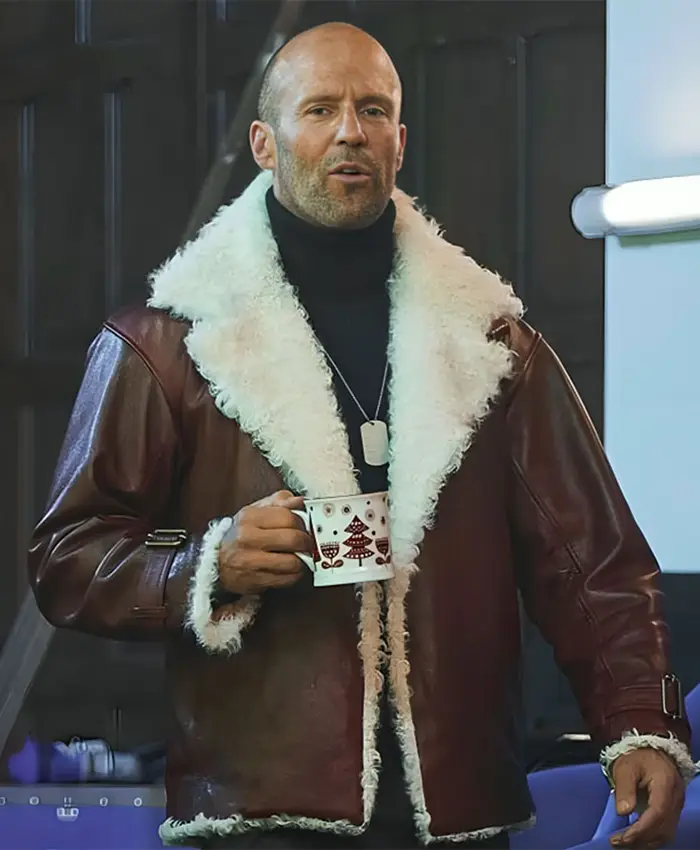
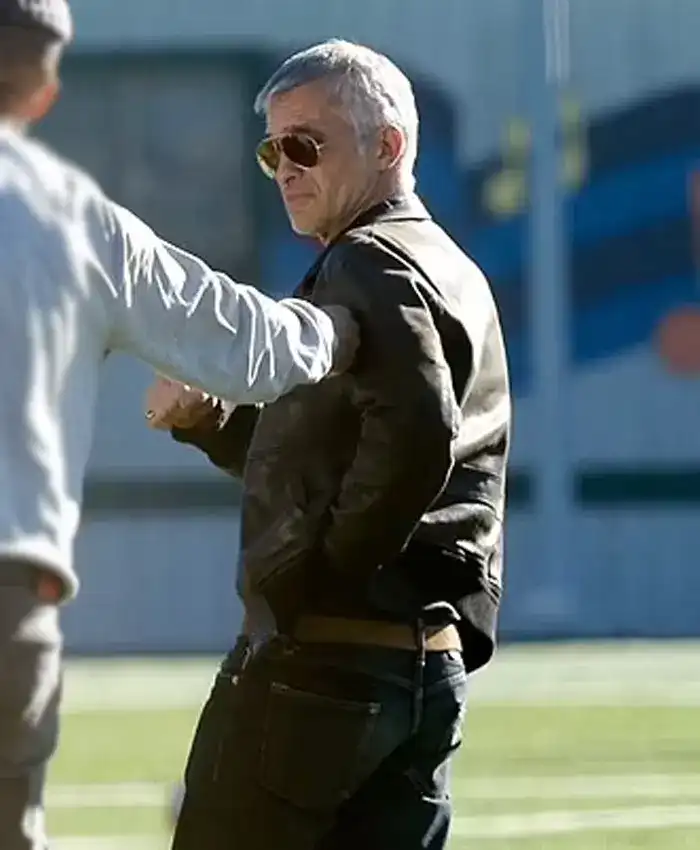
For men specifically, if you shop our distressed leather jackets for men, you’ll notice that the aesthetic translates across a wide range of styles, biker cuts, bomber silhouettes, trucker jackets, because the worn finish reads as masculine and lived-in regardless of the style. A black distressed jacket looks equally at home over jeans and a t-shirt as it does layered over knitwear.
It’s also worth noting that distressed leather tends to be more forgiving than polished leather. Minor scuffs and scratches that would be visible and unwanted on a glossy surface simply blend into the distressed finish, or add to it.
Yes. High-quality distressed leather made from full grain leather is among the most durable leather finishes available. The oil and wax treatments used in distressing actually add to the leather’s resilience. With proper care, a well-made piece lasts 15–25 years or longer.
It does show surface marks, but this is by design. Light scratches on pull-up or Crazy Horse leather often self-heal, the oils and waxes redistribute when the leather warms from handling. Deeper scratches can be buffed out with a conditioner and a cloth.
Light moisture is generally fine. The oil and wax treatments provide natural water resistance for brief exposure. Avoid prolonged saturation, if the leather gets thoroughly wet, let it dry naturally away from heat, then condition it once completely dry.
Distressed leather is made from genuine animal hide, typically full grain or top grain. Faux leather (also called PU leather or vegan leather) is a synthetic material that cannot be distressed in the same way and will crack and peel rather than developing patina with age.
What are distressed leather jackets if not one of the most versatile outerwear options available? The worn finish works across a range of styles and casualizes the look of leather in a way that polished finishes don’t. They require the same care as other distressed leather goods, regular conditioning, proper storage, and they last well.
Genuine distressed leather from a quality tannery will show non-uniform color variation, no two sections will look exactly alike. The back of the piece should show natural fibrous texture rather than a fabric backing (which indicates bonded or faux leather). The surface should absorb a small drop of water rather than letting it bead off completely.
About Author:
Caleb Norton is an experienced leather industry writer with over five years of expertise in product care, durability, and modern style guidance.






 TRACK YOUR ORDER


