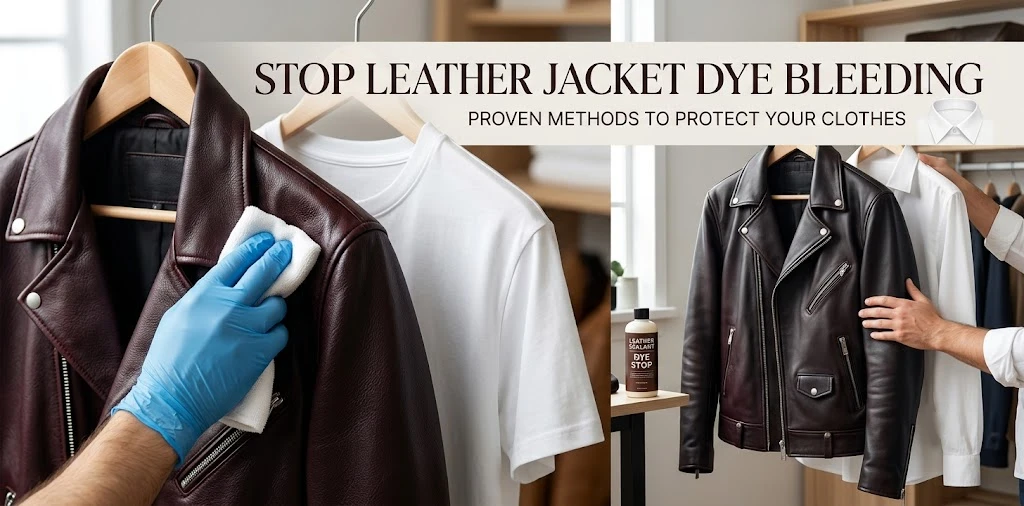
You finally get your hands on a quality leather jacket. Dark brown, deep oxblood, or rich black. You wear it once over a white tee and spend the next twenty minutes trying to figure out how to explain the stained collar to yourself. Dye bleeding from a new leather jacket is one of the most common problems buyers run into and one of the least talked about before purchase. This guide covers exactly why it happens, which leather types are worst for it, how long the problem lasts, and five specific methods that actually stop it.
Why Do New Leather Jackets Bleed Dye?
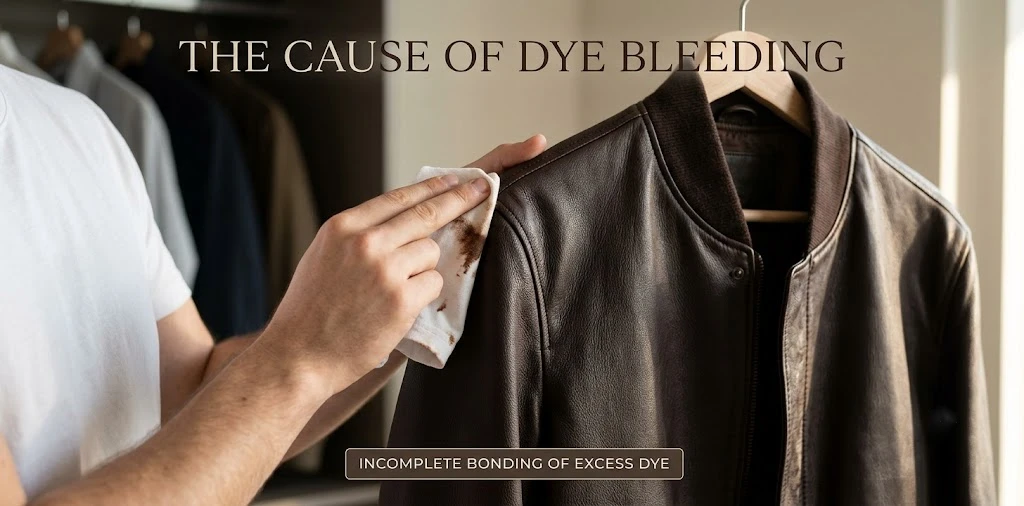
When leather gets dyed during manufacturing, the dye is applied to the surface and worked into the grain. The problem is that not all of that dye bonds permanently on the first application. Excess dye sits in the surface layer, and when heat, moisture, or friction is introduced, which happens naturally from body warmth and movement, that excess transfers onto whatever the leather is in contact with. This is called dye bleeding and it’s a normal part of the leather finishing process, not a sign that the jacket is defective. It’s more common with heavily saturated colors like black, deep brown, oxblood, and navy, because achieving those depths requires more dye concentration. Budget manufacturers also sometimes skip the final sealing step that locks dye in place, which makes the problem significantly worse and longer-lasting.
Which Leather Types Bleed Most?
Not all leather bleeds the same way and understanding the difference helps you set the right expectations before you wear anything light underneath.
Aniline leather dye transfer is the most significant issue you’ll encounter in this category. Aniline leather is dyed using soluble dyes that penetrate deeply into the hide without any surface coating applied over the top. The result is a jacket with beautiful natural grain and a soft, organic feel, but almost no barrier between the dye and whatever touches it. Aniline leather bleeds more than any other type, particularly in the first few wears, and it requires specific care products rather than general leather conditioners. Semi-aniline leather has a light protective coating applied over the aniline base, which reduces bleeding but doesn’t eliminate it entirely. Pigmented or coated leather sits at the other end of the spectrum — the heavy surface coating acts as a natural barrier and these jackets bleed the least. Most entry-level leather jackets are pigmented. Most premium, higher-priced jackets are aniline or semi-aniline, which is the unfortunate irony for people who spend more expecting fewer problems.
How Long Does Leather Jacket Dye Bleeding Last?
This is the question most people ask after the first Leather Jacket Dye Bleeding and the honest answer is: it depends on the leather type and whether you treat it. Untreated aniline leather can bleed for weeks of active wear. How long does dye bleed in a typical new leather jacket? For most pigmented leather jackets that haven’t been sealed by the manufacturer, you’re looking at three to seven wears before the excess surface dye is mostly gone through natural friction. For darker colors on aniline leather, that number can extend to fifteen or twenty wears. The leather jacket break-in period for bleeding specifically is different from the general break-in period for stiffness. The leather may soften in three to four weeks, but dye transfer can continue longer if no treatment is applied. Heat and sweat accelerate the process, which is why summer wear often speeds up the bleeding phase compared to cold-weather use where you’re layering underneath anyway.
5 Proven Methods to Prevent Dye Bleeding
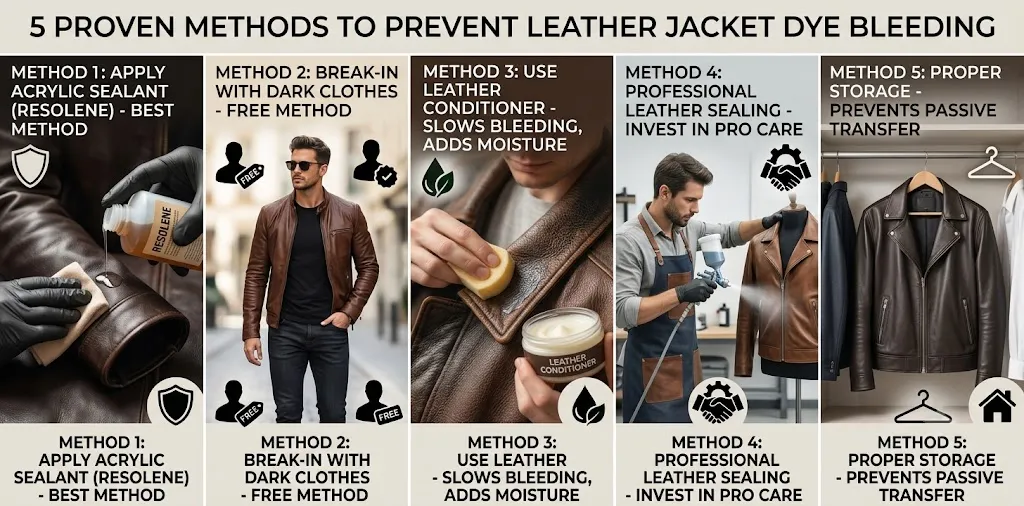
Method 1: Sealant (Resolene) — Best Method
Resolene leather jacket treatment is the most effective solution available for stopping Leather Jacket Dye Bleeding before it starts. Resolene is an acrylic finish that you apply to the leather surface, where it dries into a thin, flexible seal over the dye layer. It doesn’t change the look or feel of the leather noticeably, but it creates a physical barrier that prevents dye transfer even during heavy wear. Apply it with a soft cloth or sponge in thin, even coats. Let each coat dry completely before applying the next. Two to three coats on a new jacket are enough to stop bleeding almost entirely from the first wear. This is the method worth doing before you ever put the jacket on for the first time, and it’s the one that leather care professionals recommend above everything else.
Method 2: Break-In With Dark Clothes — Free Method
If you’d rather not apply anything to a new jacket immediately, the free alternative is simple: wear dark clothes during the leather jacket break-in period. Dark jeans, black tees, charcoal hoodies. The dye is going to transfer regardless of what you do in the first few wears, so the practical approach is to make sure it transfers onto clothing where it won’t be visible. After five to eight wears of consistent use, most of the excess surface dye will have transferred out and you can start wearing lighter pieces underneath. This method works but it has an obvious downside — you’re sacrificing some of your clothing to the break-in process rather than stopping the problem at the source.
Method 3: Leather Conditioner
A quality leather conditioner applied to a new jacket serves two functions. It softens the leather and it can slightly slow the dye bleeding process by hydrating the hide and helping the dye molecules settle more evenly. As recommended in many Leather Buying Guide resources, proper conditioning is one of the easiest ways to extend the life of genuine leather. It won’t stop bleeding the way a sealant will, but it extends the life of the leather and reduces cracking that can actually make dye bleeding worse over time by opening up the surface grain. Apply conditioner with a soft cloth in circular motions, let it absorb for thirty minutes, and buff away any excess. Use it every three to four months as part of a regular care routine rather than treating it as a one-time fix.
Method 4: Professional Leather Sealing
Professional leather sealing is the option for jackets you care enough about to invest in properly. A leather care professional will clean the jacket, assess the dye type and leather grade, and apply the correct sealing product at the correct concentration for that specific hide. The advantage over DIY resolene application is that a professional can identify whether the jacket has any existing surface issues that would prevent the sealant from bonding correctly, and they can apply multiple treatment layers in a controlled environment. This is worth the cost for a jacket above $300 where getting the treatment wrong could affect the leather’s appearance permanently.
Method 5: Proper Storage
Dye bleeding doesn’t only happen during wear. A leather jacket stored folded, compressed against other garments, or in a humid environment can transfer dye passively over time. Proper Leather jacket Care starts with correct storage habits. Store your jacket on a wide, padded hanger in a cool, dry space away from direct sunlight. Don’t compress it against other items in a wardrobe. Keep it away from light-colored fabric it could press against overnight. Proper storage won’t solve an existing bleeding problem but it prevents passive transfer and extends the effect of any sealing treatment you’ve already applied.
How to Remove Dye Transfer (If It Happened)
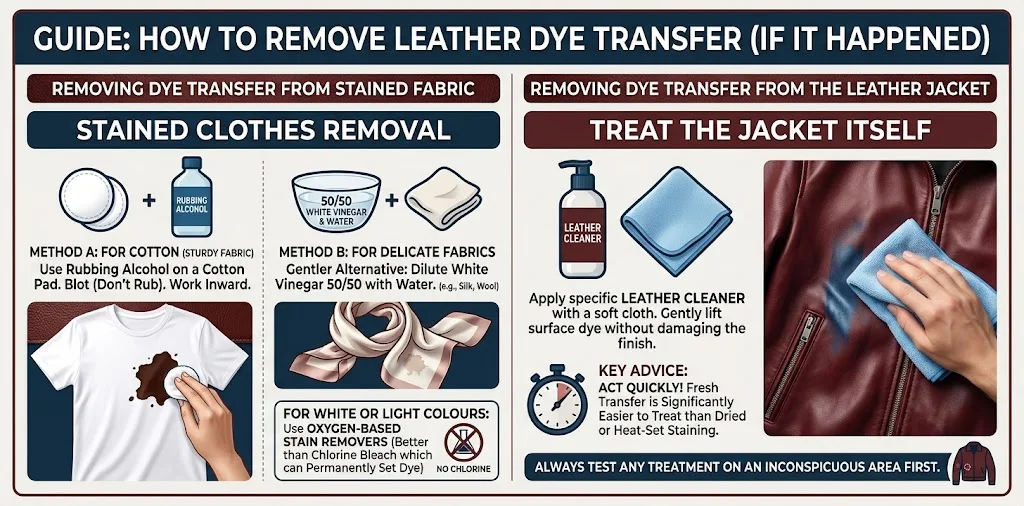
If leather stains clothes removal is what you’re searching for because you’ve already had an incident, the approach depends on the fabric that was stained. For cotton, try rubbing alcohol applied with a cotton pad, blot rather than rub and work from the outside of the stain inward to prevent spreading. White vinegar diluted 50/50 with water works as a gentler alternative on delicate fabrics. For the jacket itself, if dye has transferred from one area to another, a leather cleaner applied with a soft cloth can lift surface dye without damaging the finish. Remove dye transfer leather incidents as quickly as possible, the longer dye sits in a fabric, the deeper it bonds. Fresh transfer is significantly easier to treat than dried or heat-set staining.
For white or light-coloured fabric that has taken on dye from a jacket, oxygen-based stain removers work better than chlorine bleach, which can permanently set certain leather dyes rather than removing them. One of the most useful Leather Jacket Cleaning tips is to address dye transfer stains as soon as possible before they have time to settle into the fabric. Test any treatment on an inconspicuous area first before applying to a visible section of the garment.
Key Takeaways and Action Plan
The single most useful thing you can do with a new leather jacket before wearing it is apply two coats of resolene sealant. That one step eliminates most dye bleeding before it ever reaches your clothes. If you’d prefer not to treat the jacket immediately, commit to dark base layers for the first eight to ten wears and let the break-in process run its course. Condition the leather every three to four months regardless of what else you do — it keeps the surface healthy and reduces the cracking that makes dye problems worse over time.
Aniline leather dye transfer requires the most attention because aniline leather has no protective surface coating. If your jacket is aniline, resolene treatment is non-negotiable if you plan to wear anything light-coloured underneath. For pigmented leather jackets, a single conditioner application and a few dark-clothing break-in wears is usually sufficient.
At Leather Jacket Black, the approach to leather care starts with understanding what your specific leather needs before applying any product. Not all treatments work on all leather types and using the wrong product can cause more damage than the original dye bleeding ever would have.
Does does new leather jacket bleed describe your current situation? Start with the resolene method this week, before your next wear. It takes twenty minutes and solves a problem that would otherwise cost you multiple pieces of clothing and a lot of frustration across the next month.
Not every jacket bleeds equally, but most new leather jackets carry some degree of excess surface dye from the manufacturing and finishing process. Darker colors bleed more than lighter ones.
The most effective method is applying a resolene sealant to the jacket surface before you wear it. Two thin coats allowed to dry completely between applications creates a barrier that stops dye transfer even during active wear.
For most pigmented leather jackets, dye bleeding reduces significantly after three to seven wears. For aniline leather in deep colors like black or oxblood, the process can continue for fifteen to twenty wears without treatment.










 TRACK YOUR ORDER


