If you’ve ever wondered what is a patina on leather, you’re about to find out why it’s one of the most desirable qualities in a genuine leather jacket
There’s a moment every leather owner eventually experiences. You pull out a jacket you’ve had for three or four years, hold it up to the light, and realize it looks nothing like the day you bought it. The color is richer. The texture has softened. Certain edges have darkened in a way that looks almost deliberate, like someone worked hours to achieve that custom finish. That’s patina, and once you understand what it actually is, you’ll never look at a leather jacket the same way again.
What Is a Patina on Leather?
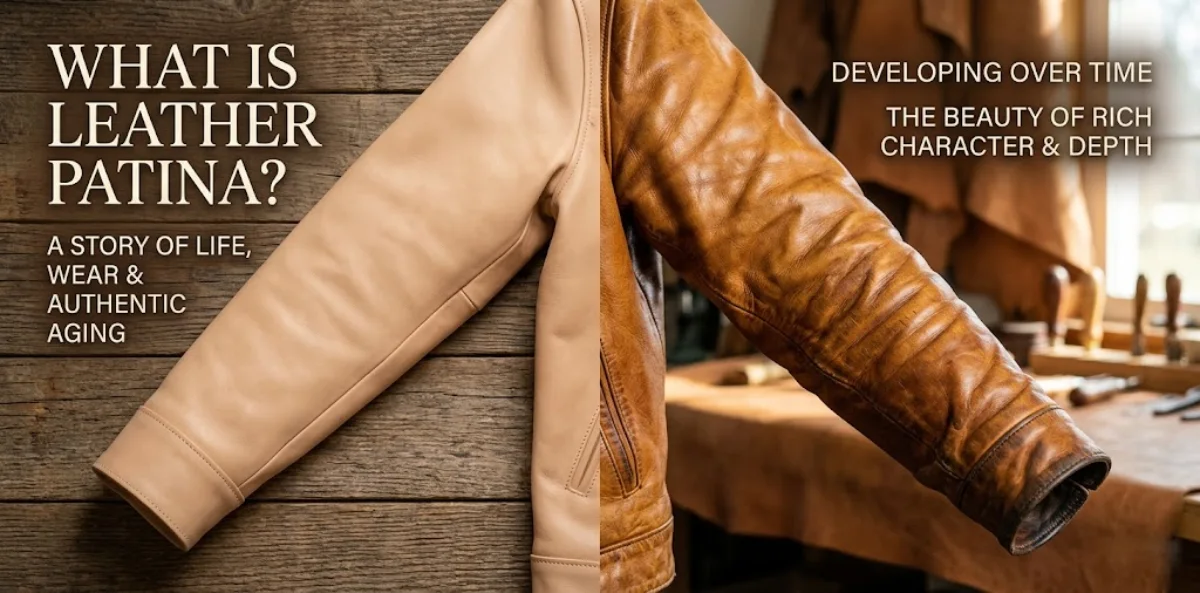
Patina is a natural change that happens to real leather over time. It shows up as a deeper color, a subtle shine, and slight darkening along the edges and folds. No two jackets develop the same patina. That’s the whole point. It builds slowly. Months of wearing, folding, and touching the leather cause tiny amounts of your skin’s natural oils to absorb into the hide. Sunlight adds to it. Even the humidity in the air plays a role. The result is a surface that looks richer and more alive than it did when you first bought it.
This is what is a patina on leather in simple terms, your jacket recording its own history. Not damage. Not fading. Just real leather doing exactly what real leather is supposed to do.
The Definition Most People Get Completely Wrong
Most people hear the word and assume it means damage, scratches, fading, wear, or the kind of thing you’d want to fix. That assumption is completely wrong. The real patina meaning in the context of leather refers to a natural, gradual transformation that happens when genuine hide is exposed to everyday life over time. It’s not deteriorating; it’s evolution, and there’s a big difference between the two.
What Does It Actually Look Like on Your Jacket?
So what does patina mean when you’re standing in front of a mirror? It means tonal depth and subtle color variation across the surface. There’s something about patinated leather, that character and richness, that can’t be duplicated with brand new leather. Think of it as the hide absorbing your lifestyle; every fold, every rainy morning, and every warm afternoon outdoors contributes to a finish that becomes unique to you and nobody else.
Why It Makes Your Leather More Valuable Over Time
Here’s the question people always ask: is leather patina good, or is it something to worry about? The honest answer is that patina is one of the best things that can happen to a genuine leather jacket. It signals quality material that’s aging exactly as it should while adding visual depth. The only time patina becomes a concern is when cracking or dryness comes with it, which points to a lack of conditioning, not the patina process itself.
How Does Leather Patina Develop Over Time?
You’ve got to get under the hood of the organic chemistry of the tanning process to get a handle on how does leather patina develops. Premium vegetable-tanned leather contains natural tannins that react with oxygen and moisture in the air, a process called leather oxidation, which is similar to how raw metals change color when exposed to the elements outdoors. Over months of consistent wear, these tannins slowly oxidize and push the surface into much richer, deeper color territory.
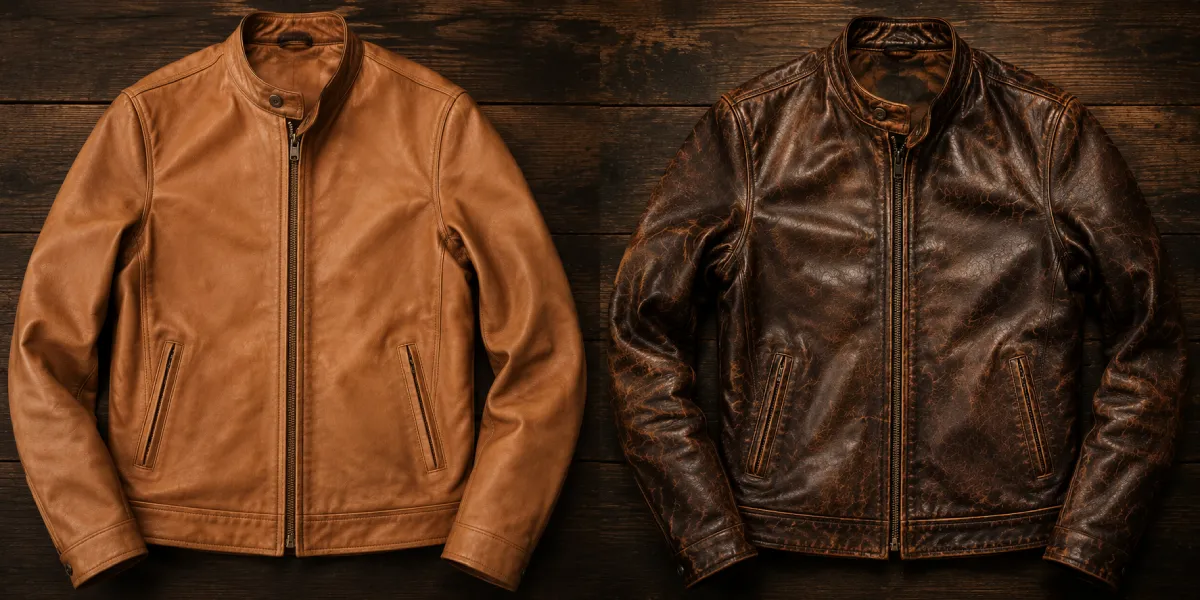
This darkening process does not happen evenly across the entire jacket at once, which is exactly what makes the final look so striking. High-friction areas like elbows, cuffs, and collar creases darken much faster because physical movement opens up the leather fibers. These opening pores naturally pull in more environmental moisture and natural oils in leather from your skin with every single movement. Flatter panels stay closer to their original shade, creating a beautiful, contrasting depth that cannot be manufactured artificially.
What a Fully Developed Patina Actually Looks Like
The leather patina before and after difference genuinely shocks people who see it for the first time. A pale tan jacket can shift into a deep honey-amber within two years of consistent wear, while a rich chocolate brown can develop near-black accents along every stress point. The transformation never really stops, either. It just slows down after the leather hits a certain depth of character because the longer you wear it, the better it looks.
Which Leather Types Develop the Best Patina?
Why Not Every Hide Ages the Same Way
Does all leather patina? Not equally, and this is where most buyers get caught off guard. Full-grain leather, cut from the outermost and most intact layer of the hide, patinas exceptionally well because its surface has never been sanded or corrected. Top-grain cuts age more slowly, while bonded leather and heavily coated genuine leather barely patina at all. Whatever surface change occurs on cheap alternatives tends to look like peeling rather than aging. If patina matters to you, full-grain is the only real starting point worth considering.
The Truth About Dark Leather and How It Changes
Black leather patina works differently from lighter hides, but the transformation is still very real and very striking. Rather than dramatic color shifts, black leather develops gloss variation across the surface where some areas deepen to a near-mirror finish while others soften into a rich matte. With time, stress creases can develop a slight gray or silver cast that looks exceptionally elegant and distinguished. Understanding structural design techniques like Leather embossing vs Debossing helps explain why textured or pressed hides accept these natural leather aging patterns differently than completely smooth skins.
Surface Treatments and How They Affect Aging
Any coating, wax finish, or synthetic treatment applied to the leather surface will slow the patina process down. Treatments block direct contact between the hide and the environment, which is exactly what drives patina forward. The less interference between genuine leather and daily life, the richer and faster the aging develops. This is why minimally treated full-grain leather always outperforms heavily finished alternatives when it comes to long-term character.
What Causes Leather to Develop a Patina?
Sunlight and Heat Accelerate the Process
Sunlight and heat are two of the main outside influences that play a part in the leather aging process. UV will cause the tannins to oxidize at a faster rate and cause the oils to move to the surface of the leather. A jacket that has been worn outside on a regular basis, in changing temperatures and natural light, will develop a patina much quicker than one that has been kept folded away in a wardrobe for the majority of the year.
The Role Your Body Plays Every Single Day
Every time you wear your jacket, your skin transfers oils, warmth, and moisture onto the leather surface. Over months and years, these natural transfers penetrate the hide and directly alter both its color and texture. This is arguably the most personal dimension of patina; your own body chemistry is literally shaping the finish. No two jackets ever develop the same way because no two people wear them the same way.
Physical Wear and What It Does to the Surface
Repeated folding at the elbows, pressure from a bag strap across one shoulder, and constant collar movement all build character. All of these create localized friction that smooths and darkens the surface gradually. These mechanical contributions work alongside oxidation and oil absorption to build the full patina effect. The more genuinely you live in your jacket, the faster it develops.
How to Speed Up Patina on a Leather Jacket?
Daily Habits That Make a Real Difference
The most direct answer to how to get patina on a leather jacket faster is simply to wear it more. Don’t save it for special occasions, and don’t avoid light rain. Moisture followed by natural air-drying encourages surface oxidation and works with the leather’s own oils to push color development forward. The more consistent your daily wear, the more evenly and quickly the patina builds.
The Right Products to Use and What to Avoid
A quality leather conditioner for patina is one of the most useful tools in your rotation. Oil-based formulas, beeswax balms, neatsfoot oil, and lanolin conditioners replenish the natural oils in the hide and keep the fiber structure flexible. Silicone-based sprays do the opposite; they seal the surface and block the very process you’re trying to encourage. If minor marks pop up, this guide on removing scratches from leather handles them cleanly without disrupting your patina.
Working With the Elements Instead of Against Them
Natural leather aging is not something you can force or fake convincingly, but you can absolutely work with the conditions around you. Rotate your jacket through different environments on long drives, walks, and varied weather. Let it fold and flex in its natural stress points. The process rewards patience and consistent real-world wear far more than any product shortcut ever could.
How to Care for Leather While It Develops a Patina?
How to Condition a Leather Jacket Without Slowing Progress
Knowing how to condition a leather jacket correctly during the patina phase makes a significant difference. Use a natural oil or wax-based conditioner and apply it sparingly with a soft, lint-free cloth, never directly from the bottle onto the jacket. Work it in slowly, let it absorb for at least thirty minutes, then buff off any excess. Over-conditioning saturates the fibers, creates a surface barrier, and actually slows oxidation down.
Cleaning Without Undoing the Aging Process
Cleaning and patina are not enemies, but the wrong cleaning products absolutely are. Harsh chemical cleaners strip the natural oils that drive the entire aging process, setting your patina back significantly with a single use. Use gentle methods and pH-balanced products made for true hide and follow a trusted Leather Jacket Cleaning Guide. Condition afterward to restore moisture balance and only clean when the jacket really needs it.
Long-Term Storage and Wear Rotation Tips
Proper storage between seasons protects everything you’ve built. Use a wide wooden hanger, a breathable garment bag, and a cool, dark space away from direct heat or humidity to preserve the shoulder structure. Rotating wear across multiple jackets also helps, allowing each item to breathe and dry thoroughly before the next wear session. If you love the worn-in, richly aged leather aesthetic right out of the box, our Distressed Leather Jacket collection carries that character built right in from the start.
Yes, wear the jacket every day in natural light, let it flex the way it was meant to, and use oil-based conditioners with absolutely no silicone sprays.
A deep conditioning can help soften surface wear, however if there is heavy structural cracking or peeling you may need a professional leather restoration.
About Author:
Caleb Norton is an experienced leather industry writer with over five years of expertise in product care, durability, and modern style guidance.







 TRACK YOUR ORDER


