
What Is a Windbreaker Jacket?
Simple Definition of a Windbreaker Jacket
A windbreaker jacket is a thin, lightweight outer layer specifically designed to shield you from wind chill and light rain without adding unnecessary bulk to your outfit. Unlike heavier coats or insulated parkas, a windbreaker focuses on one core job: stopping the wind from penetrating your clothing and robbing your body of warmth.
At its simplest, think of a windbreaker as a smart barrier a second skin made from tightly woven synthetic fabric that sits comfortably over your regular clothing and deflects the elements. Most windbreaker jackets are made from nylon or polyester, often treated with a water-repellent coating, and feature functional details like elastic waistbands, elasticated cuffs, a front zipper, and sometimes a packable hood.
If you’ve ever stepped outside on a cool, breezy day in just a hoodie and felt the cold cutting right through it, a windbreaker is the solution you’ve been missing. It’s not designed to be your warmest layer, it’s designed to be your smartest one.
How a Windbreaker Works Against Wind
To understand how a windbreaker works, it helps to understand the concept of wind chill. Wind doesn’t actually change the temperature in the air, but it dramatically increases how cold that air feels on your skin by pulling heat away from your body at a faster rate. Even a moderate breeze of 15 mph can make a 50°F (10°C) day feel closer to 40°F (4°C).
A windbreaker counters this effect by using a tightly woven, wind-resistant outer shell that physically blocks airflow from reaching your inner layers and skin. The dense weave of nylon or polyester acts as a wall against the wind, while the fit typically snug at the wrists and waist seals off entry points where cold air might sneak in. The result is that your body heat stays trapped close to your skin, making you feel significantly warmer without the need for thick insulation.
This is why runners, cyclists, and hikers reach for a windbreaker before a heavier jacket. It adds warmth without restricting movement, and it does so through engineering rather than volume.
Windbreaker vs Regular Jackets (Basic Difference)
The most straightforward way to understand a windbreaker is to compare it to what you already own. A regular jacket whether that’s a denim jacket, a fleece, or a casual zip-up — is designed primarily for warmth and style. It provides insulation but does relatively little to stop wind or moisture from passing through its fabric.
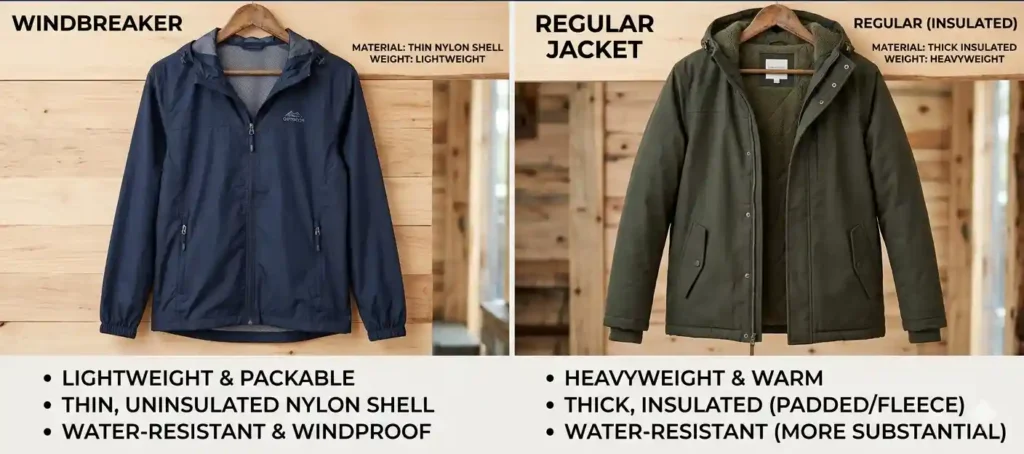
A windbreaker, on the other hand, is engineered specifically for weather resistance. Its outer shell is wind-resistant and often treated for water repellency, it packs down small, and it weighs very little. Where a regular jacket might feel cozy indoors or on a still day, it quickly loses effectiveness the moment the wind picks up. A windbreaker is built for exactly that moment.
Why Is It Called a Windbreaker Jacket?
Origin of the Term “Windbreaker”
The word “windbreaker” as we know it today has an interesting and fairly traceable history. According to etymological records, the term first appeared in print around 1924, described in a newspaper column as a jacket “designed to break the force of whipping winds at winter sports and for country use.” The term was later trademarked by the John Rissman company of Chicago, who used it for their gabardine outerwear jackets.
The name itself is elegantly literal, it’s a jacket that breaks (or blocks) the wind. In the United Kingdom and parts of the Commonwealth, including Australia and India, the same garment is commonly called a “windcheater,” with that term predating “windbreaker” and originally used to describe anorak-style pullovers rather than zippered jackets.
How the Name Reflects Its Function
What makes the name “windbreaker” so enduring is that it does exactly what it says on the label. There’s no marketing fluff involved, the jacket breaks the wind. This directness in naming reflects the garment’s origin as a purely functional piece of outdoor clothing, designed not for fashion runways but for real-world conditions: open fields, mountain trails, stadium bleachers, and coastal walks.
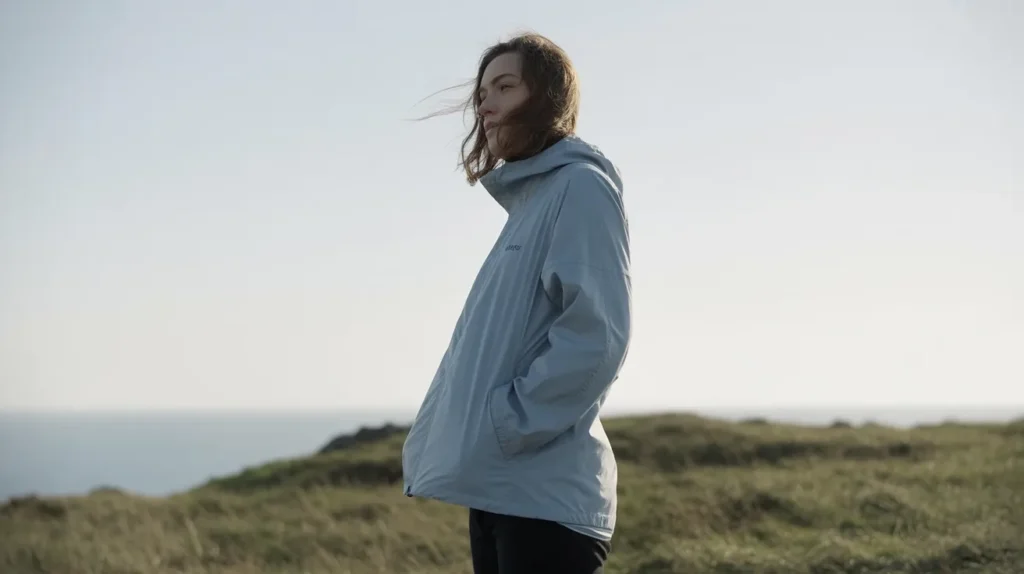
Every feature of a windbreaker traces back to that core function. The tight fabric weave breaks the wind. The elasticated cuffs and waistband seal in warmth by preventing drafts. The hood, when present, breaks the wind around your head and neck. Even the lightweight packability of the jacket is a function-first decision, it needs to be something you can easily carry along in case the weather shifts.
Evolution of Windbreaker Jackets Over Time
The story of the windbreaker stretches back much further than 1924. Its deepest roots lie with the Inuit peoples of the Arctic, who crafted parkas from two layers of animal skin — typically seal or caribou, with the hair facing inward to trap warmth. These garments were weatherproofed using seal gut, making them naturally wind and water resistant. When Western polar explorers encountered these parkas in the late 19th and early 20th centuries, they quickly adopted and adapted them, bringing the concept of lightweight, weather-resistant outerwear into mainstream use.
After World War II, a technological turning point arrived: synthetic materials. Nylon and polyester began replacing animal skins, making jackets dramatically lighter, less bulky, and easier to manufacture. The 1960s and 1970s saw a perfect storm of popularity sportswear was booming, stadium crowds needed practical outerwear, and brands like Nike, Adidas, and The North Face began producing windbreakers tailored for athletes and outdoor enthusiasts. By the 1990s, windbreakers had crossed over fully into streetwear culture, becoming a symbol of casual, relaxed style. Today, they appear everywhere from high-fashion runways to everyday commutes, made from advanced fabrics including recycled nylon and Gore-Tex.
Key Features of a Windbreaker Jacket
Lightweight and Packable Design
One of the most practical features of a windbreaker is how little space it occupies. Many modern windbreakers can be stuffed into their own pocket, creating a compact bundle small enough to fit in a backpack, gym bag, or even a large coat pocket. This packability is a direct result of the ultra-thin synthetic materials used in their construction. nylon in particular has an excellent strength-to-weight ratio, meaning it can be woven tightly enough to block wind while remaining featherlight.
This makes windbreakers the ideal “just in case” jacket, the kind you throw in your bag every morning without giving it a second thought, and then pull out the moment the weather turns.
Breathability and Ventilation
Despite their wind-blocking properties, quality windbreakers are designed to remain breathable. This matters enormously during physical activity. If a jacket traps too much moisture — sweat generated by your moving body, it quickly becomes uncomfortable, damp, and actually counterproductive in keeping you warm.
Modern windbreakers address this through several techniques: the use of breathable synthetic fabrics that allow water vapor (sweat) to escape while still blocking incoming wind, mesh lining in the body or underarms, and ventilation panels or zippered vents in more technical models. The goal is to keep moisture-wicking properties in balance with wind resistance, making the jacket comfortable whether you’re jogging in the park or standing on a breezy hillside.
Wind and Light Rain Protection
While a windbreaker is not a fully waterproof garment, most quality windbreakers are treated with a Durable Water Repellent (DWR) coating. This treatment causes water droplets to bead up and roll off the surface of the jacket rather than soaking in, providing meaningful protection in a light drizzle or brief shower.
The key distinction here is that DWR-treated windbreakers are water-resistant, not waterproof. In sustained heavy rain, water will eventually penetrate the fabric. But for the vast majority of unpredictable weather moments, a sudden spring shower, light coastal drizzle, or morning mist, a windbreaker handles the job perfectly well.
What Materials Are Windbreaker Jackets Made Of?
Common Fabrics Used (Nylon, Polyester, etc.)
The two most common materials in windbreaker construction are nylon and polyester, each with its own personality. Nylon is the lighter of the two, and it produces that characteristic “swishy” sound when you move. It’s excellent at wind resistance and is the go-to fabric for packable, ultralight windbreakers. Polyester is slightly heavier but notably softer and quieter, making it a preferred choice when comfort and insulating warmth matter more than minimal weight.
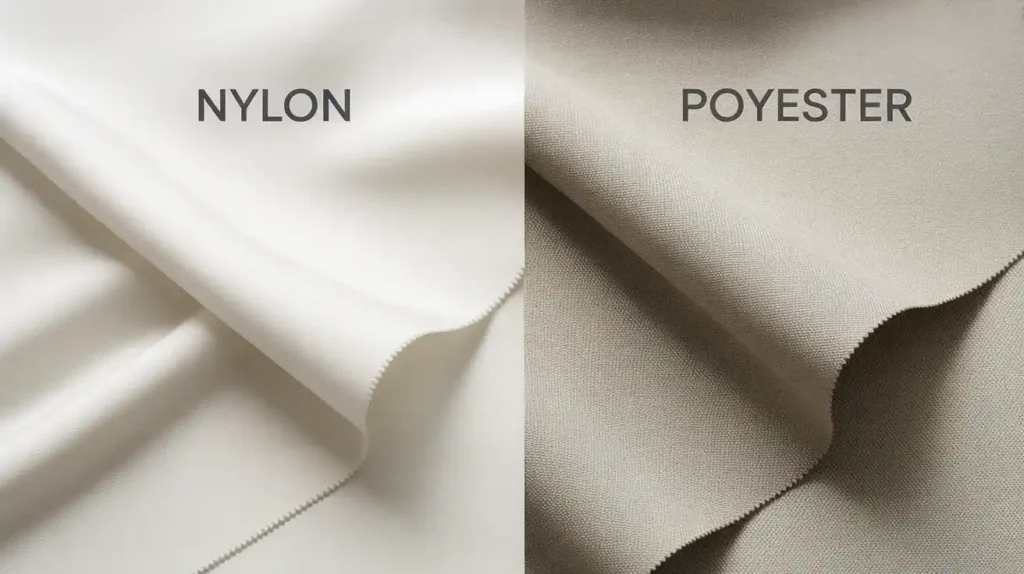
A third option, tricot, is a heavier woven fabric that creates the warmest windbreakers, though at the cost of packability and some breathability. For milder, active-use conditions, nylon and polyester remain the dominant choices. Some premium windbreakers also incorporate Gore-Tex or similar membrane technologies, combining excellent breathability with superior weather resistance.
Coatings and Treatments for Weather Resistance
The base fabric of a windbreaker does much of the work on its own, but manufacturers enhance performance through applied treatments. The most widespread is the DWR (Durable Water Repellent) coating mentioned earlier a chemical treatment bonded to the outer layer of the fabric that creates a hydrophobic surface. On a DWR-treated jacket, you can visibly watch water bead up and roll off, which is a satisfying sign that the coating is doing its job.
Some higher-end windbreakers also feature sealed or taped seams — a process where the stitching lines (the weakest points in any garment for water penetration) are covered with a bonded waterproof tape. This is more commonly associated with rain jackets, but premium windbreakers increasingly include this feature for added protection.
How Material Affects Performance and Comfort
Choosing between materials ultimately comes down to how and where you plan to use the jacket. For running, cycling, or any high-output activity, a lightweight nylon windbreaker with good breathability and moisture-wicking properties is ideal it won’t weigh you down or trap sweat. For casual everyday use where comfort and a softer feel matter more, a polyester windbreaker offers a pleasant wearing experience. In colder climates where warmth is a priority, a tricot or insulated windbreaker provides better heat retention.
The material also affects the lifespan of the DWR coating nylon tends to hold DWR treatments well, though washing frequency can degrade the coating over time. Refreshing DWR is straightforward with spray-on treatments available at most outdoor gear retailers.
What Is a Windbreaker Jacket Used For?
Outdoor Activities (Running, Hiking, Cycling)
A windbreaker jacket is an essential companion for outdoor activities, particularly those involving sustained movement in open environments. Runners appreciate windbreakers because they provide a warm, wind-free microclimate around the body during cold-weather training without restricting stride or overheating once the body warms up. Cyclists face one of the harshest wind-chill scenarios of any outdoor athlete even on a calm day, riding at speed creates a constant headwind making a lightweight wind-resistant layer almost non-negotiable. Hikers use windbreakers as a mid-layer or outer shell on exposed ridges and summit approaches where temperatures and wind speeds can shift rapidly.
High-visibility colors and reflective panels on many sport-focused windbreakers also add a meaningful safety benefit during early-morning or dusk workouts.
Everyday Casual Wear
Beyond the trail and the track, the windbreaker has long since earned its place as a legitimate everyday wardrobe staple. Paired with jeans, chinos, or joggers, a clean, well-fitted windbreaker looks sharp and intentional. The athleisure movement of the past decade normalized sporty outerwear in non-athletic settings, and windbreakers with their sleek profiles and variety of colorways, were natural beneficiaries.
From commuting to weekend errands to casual social outings, a windbreaker offers the kind of low-effort, high-function appeal that makes it one of the most-reached-for pieces in a practical wardrobe.
Travel and Layering Purposes
For travelers, a windbreaker is close to a perfect companion garment. It packs down to almost nothing, weighs very little, handles a wide range of weather scenarios, and serves effectively as an outer shell over base and mid-layers. Whether you’re navigating a cold airport terminal, walking through a breezy European city, or heading from a humid beach to an air-conditioned restaurant, the windbreaker transitions effortlessly between conditions.
As a layering piece, a windbreaker works best as the outermost layer over a base layer and optional fleece or mid-layer, the outer shell that locks in the warmth built up by everything beneath it.
Why You Need a Windbreaker Jacket
Protection Without Bulk
The single most compelling reason to own a windbreaker is the protection-to-bulk ratio it offers. No other type of jacket gives you meaningful wind and weather protection at such a low weight and volume. A heavy winter coat protects you from extreme cold but is impractical for three seasons of the year. A regular hoodie keeps you cozy indoors but offers almost no wind resistance outdoors. A windbreaker sits in a uniquely practical middle ground genuinely protective without asking anything of you in terms of weight or space.
Versatility Across Seasons
One of the windbreaker’s most underappreciated qualities is its genuine four-season utility, though it peaks in spring, fall, and mild winter conditions. In spring and fall, when temperatures fluctuate unpredictably between warm afternoons and cold evenings, a windbreaker is the perfect single jacket to carry. In summer, it handles cool nights, beach breezes, and unexpected showers with ease. In winter, it serves as a windproof outer shell over heavier insulating layers, adding meaningful warmth without adding significant bulk.
Few garments can honestly claim usefulness across that many contexts. The windbreaker is one of them.
Practical Benefits for Daily Use
Beyond the weather-specific benefits, the windbreaker earns its place in daily life through sheer practicality. It’s typically easy to wash and quick to dry, requires no special care, and holds up well over extended use. The array of pockets often including interior security pockets makes it a functional piece for carrying essentials. And because windbreakers are available at a wide range of price points, they’re accessible to virtually everyone.
When Should You Wear a Windbreaker Jacket?
Ideal Weather Conditions
A windbreaker performs at its best in conditions that fall between “mildly cool” and “actively windy with light precipitation.” The sweet spot is roughly 45°F to 65°F (7°C to 18°C) on breezy or overcast days. In these conditions, a windbreaker alone (over a t-shirt or light base layer) provides comfortable protection without the overheating risk that comes with a heavier jacket.
Seasonal Use (Spring, Fall, Summer Nights)
Spring and fall are the undisputed home seasons for windbreakers. Both are characterized by unpredictable weather patterns, shifting temperatures, and frequent wind all conditions that the windbreaker is purpose-built to handle. Summer evenings, particularly near coastlines or at altitude, call for exactly the kind of light wind protection a windbreaker provides. Even in mild winter climates, a windbreaker over a mid-layer can be sufficient on all but the coldest days.
Situations Where Windbreakers Work Best
Windbreakers shine in situations with sudden weather changes a morning run that starts cool and warms up, a hiking trail that begins sheltered and opens onto a windy ridge, or an outdoor event where you’ll be sitting still in the breeze. They’re also ideal for transitional moments: stepping off a warm bus into cold air, moving between heated and cooled indoor-outdoor spaces, or traveling between climates with a single carry-on bag.
Windbreaker vs Rain Jacket: What’s the Difference?
Water Resistance vs Waterproofing
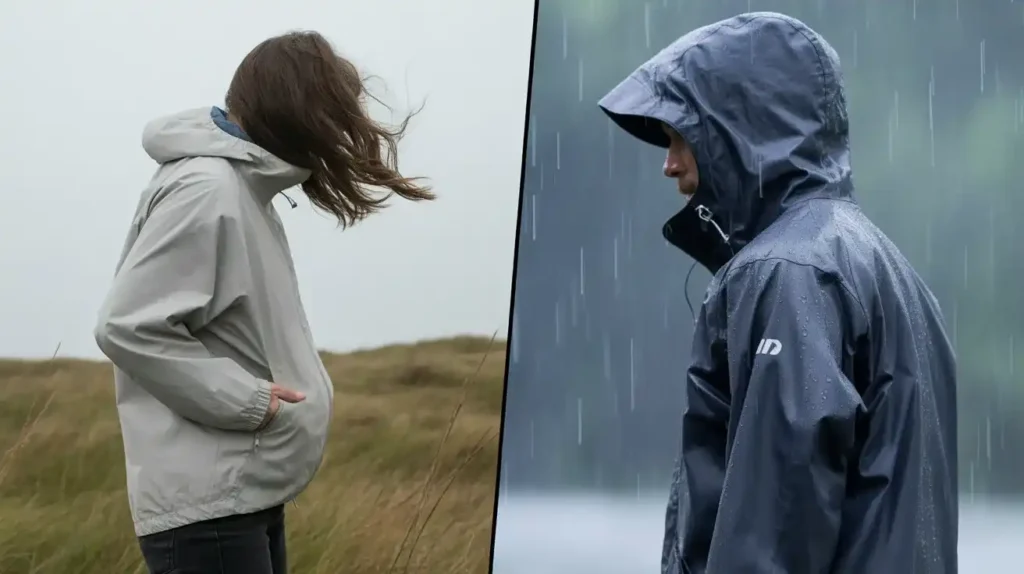
This is one of the most common points of confusion in outerwear. A windbreaker is wind-resistant and water-resistant meaning it handles breezes and light rain effectively. A rain jacket uses multi-layer construction, sealed seams, and waterproof membranes (such as Gore-Tex) to keep you completely dry during sustained, heavy rainfall.
The critical distinction is that a windbreaker’s DWR coating will eventually allow water to penetrate in heavy rain, while a true rain jacket will not.
Weight, Breathability, and Comfort
Windbreakers are almost always lighter and more breathable than rain jackets. Rain jackets, by necessity, use denser, multi-layered construction to achieve waterproofing, which increases weight and can reduce breathability (though premium rain jackets with advanced membranes address this well). For activities in dry or lightly damp conditions, a windbreaker is more comfortable and less restrictive.
Which One Should You Choose?
If you live in or travel to regions with frequent heavy rainfall, a rain jacket is the wiser investment. If you face more typical breezy, occasionally damp conditions, a windbreaker covers you beautifully at a fraction of the weight and cost. Many experienced outdoor enthusiasts own both — a windbreaker for everyday active use and a rain jacket for serious wet-weather conditions.
Windbreaker vs Softshell Jacket: Which One Is Better?
Differences in Material and Construction
A softshell jacket uses a stretch woven or bonded fleece outer that prioritizes comfort, flexibility, and moderate wind resistance. A windbreaker uses a tightly woven nylon or polyester shell that prioritizes maximum wind resistance and packability. Softshells feel more like a garment you’d wear close to the body; windbreakers feel more like a true outer layer.
Performance in Different Weather Conditions
In calm, cold conditions, a softshell jacket often wins on comfort because its flexible material moves with you and retains body heat well. In windy or lightly wet conditions, a windbreaker’s tighter shell outperforms a softshell. Softshells are less water-resistant than windbreakers in most cases, making windbreakers the better choice when precipitation is a factor.
Best Use Cases for Each Jacket Type
Softshells are ideal for climbing, trail running in cold but dry weather, and any activity where stretch and body-mapped warmth are priorities. Windbreakers are the go-to for cycling, running in variable weather, travel, and casual everyday use where packability and light weather protection are the primary needs.
Different Types of Windbreaker Jackets
Pullover vs Full-Zip Windbreakers
Full-zip windbreakers offer the most versatility you can fully open the front for ventilation during high-intensity activity, or zip up completely for maximum protection. Pullover windbreakers, which go on over your head and typically have a half-zip or quarter-zip chest opening, tend to have fewer seams and stress points, making them slightly more wind-resistant and often more packable. Pullovers are popular among runners and minimalist travelers; full-zips suit those who value easy on-and-off functionality.
Hooded vs Non-Hooded Styles
A hooded windbreaker dramatically increases protection, particularly for the neck and head, areas highly susceptible to wind chill. In gusty conditions, a good hood can make a significant difference in comfort. Non-hooded windbreakers offer a sleeker appearance and suit casual or urban settings where you want weather protection without needing a hood. Many windbreakers offer packable or detachable hoods as a practical middle ground.
How to Choose the Right Windbreaker Jacket
Factors to Consider (Fit, Material, Features)
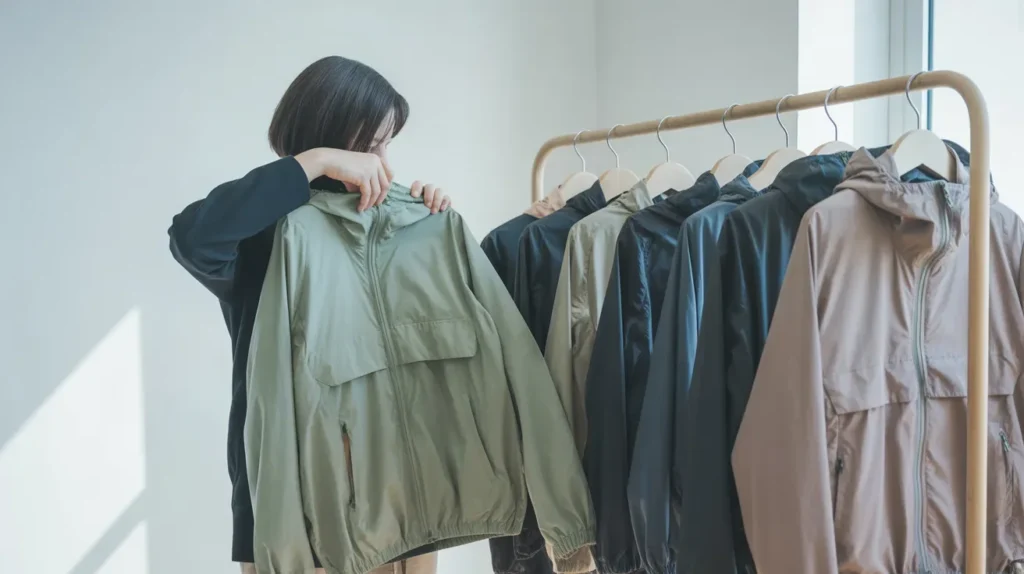
Start with fit: a windbreaker should be close enough to the body to prevent billowing in the wind, but with enough room to layer a light base layer or mid-layer underneath. Next, consider material: nylon for maximum lightness and packability, polyester for softer feel and better insulation. On features, prioritize based on your primary use case a runner needs breathability and reflective details, a traveler needs packability and versatile styling, a hiker may want sealed seams and a serious hood adjustment system.
Choosing Based on Your Activity Level
High-output activities like running and cycling demand highly breathable, moisture-wicking windbreakers — look for mesh lining, ventilation panels, and athletic cuts. Lower-intensity outdoor use and casual wear can prioritize warmth, aesthetics, and comfort. For multipurpose use, a moderately breathable windbreaker with a clean profile that works equally well in athletic and casual settings offers the best of both worlds.
Budget vs Quality: What Matters Most
Windbreakers are available at nearly every price point, from under $30 for basic models to several hundred dollars for technical, feature-rich versions from brands like Patagonia, Arc’teryx, or The North Face. For casual everyday use, a mid-range windbreaker in the $50–$120 range typically offers excellent quality, durable DWR treatment, and a flattering fit. If you’re using the jacket heavily for outdoor sports or travel in unpredictable conditions, investing in a higher-quality model with stronger weather resistance and more technical features pays off over time.
Are Windbreaker Jackets Waterproof or Water-Resistant?
Understanding Water-Resistant vs Waterproof
This is a critical distinction worth repeating clearly: windbreaker jackets are water-resistant, not waterproof. Water-resistant jackets use treated outer fabric to repel light moisture, causing rain to bead up and roll off instead of soaking through, at least for a short time. In contrast, waterproof jackets use sealed seams and impermeable membrane layers to block water completely, even during heavy and prolonged rainfall.
How Much Rain Can a Windbreaker Handle?
Most windbreakers perform well in light to moderate rain for a limited duration — typically a light shower of 15 to 30 minutes. The DWR coating is the critical factor here. When it’s fresh and functioning well, you’ll see water visibly beading off the jacket surface. As the coating wears through use and washing, this performance diminishes, though it can often be restored with a wash-in or spray-on DWR product.
In heavy or prolonged rain, expect water to eventually work its way through the fabric, particularly at seams and high-contact areas like the shoulders.
When You Should Choose a Waterproof Jacket Instead
If your typical weather involves frequent, heavy rain — think the Pacific Northwest, the British Isles, tropical climates with monsoon seasons, or winter mountain conditions — a dedicated waterproof jacket is worth the investment. You should also lean toward a waterproof option for any multi-day outdoor adventure where staying dry is a safety concern, not just a comfort preference. For everything else — daily commutes, light outdoor activity, travel in temperate climates, spring and fall layering, a well-made windbreaker handles the job with far greater ease and packability than a full waterproof jacket ever could.
A windbreaker jacket is one of those rare pieces of clothing that earns its place in your wardrobe not through trends or fashion cycles, but through sheer usefulness. Whether you’re a dedicated runner, a weekend hiker, a frequent traveler, or simply someone who wants smarter, lighter outerwear for everyday life, a quality windbreaker delivers more practical value per gram than almost anything else you’ll ever wear.