

In this guide
Everyone agrees that a chinchilla coat is a must-have piece. You buy this style only once and wear it for many winters. So it pays to know what you are buying. A chinchilla fur coat is soft, light, and rare. Moreover, it is also a big purchase. As we proceed in this blog it will cover what really makes the fur special, price, value, styles, care tips and where to buy. First, you will learn facts behind the fur. Later on you will see what drives the cost. Then you can decide if it fits your life. By the end, you will shop for chinchilla outfits with confidence.
What Makes a Chinchilla Coat So Special?

The chinchilla has the densest fur of any land mammal, with about 20,000 hairs per square centimeter. Many hairs grow from each follicle, which is why the fur feels like velvet. The animal is also very small, so a full-length coat can need up to 150 pelts. This fact helps explain the price, which we cover next. The story is old, too. The Chincha people of the Andes wore the fur long ago, and the international fur trade began in the 16th century. One quick note on words: Chinchilla Fabric is a thick, napped wool fabric named for the animal’s look. It is a textile, not pelts, so if you searched that word, this guide is about the fur instead. In short, a chinchilla coat stands out for a few key facts: density, softness, and low weight. A chinchilla fur coat is made from real pelts, and that is why it costs so much.
How Much Does a Chinchilla Coat Cost? A Clear Price Breakdown
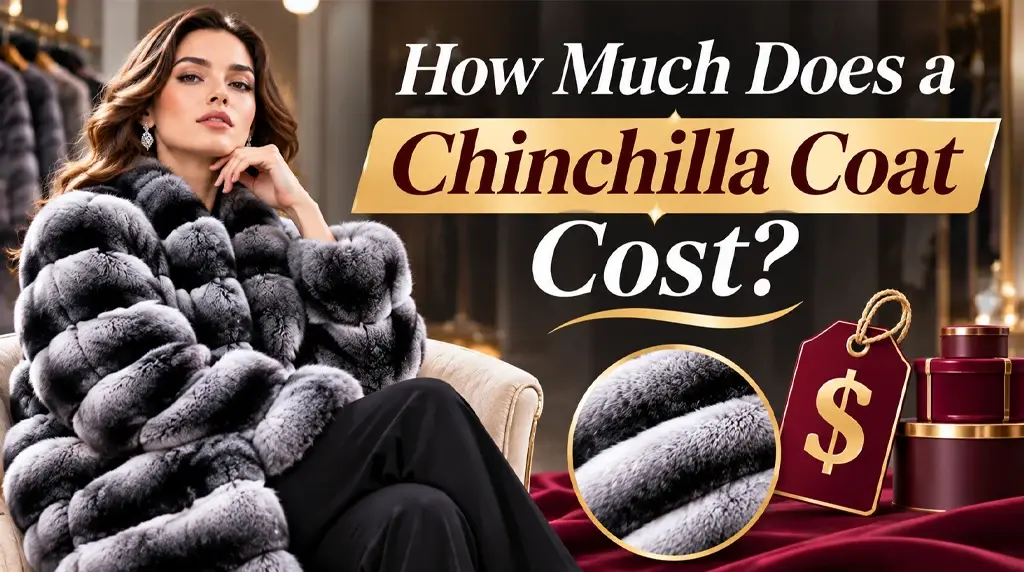
A new full-length chinchilla coat from a luxury seller usually costs tens of thousands of dollars. Smaller pieces cost less. Still, the range is wide, so it helps to know why.
What Drives Chinchilla Fur Coat Price
The chinchilla fur coat price depends on a few clear factors. Each one changes the final number in its own way.
- Pelt count: a full-length coat can use up to 150 pelts.
- Pelt quality: even color and clean fur raise the cost.
- Length: a full-length coat, a jacket, or a vest.
- Brand and craftsmanship: skilled work costs more.
- Condition: new, pre-owned, or vintage.
Typical Price Ranges
Prices depend more on length than anything else. A full-length coat sits at the top because it uses the most pelts. A jacket costs less, since it needs fewer pelts. A vest costs less again, because it covers the least area.
Pre-owned and vintage pieces vary a lot. Their price depends on age, condition, and the maker. Also, always note the currency a seller uses. Do not compare prices from two countries without checking the exchange rate.
Set your budget first. Then pick a style from the next section.
Is a Chinchilla Coat Worth It? Pros, Cons and Honest Trade-Offs
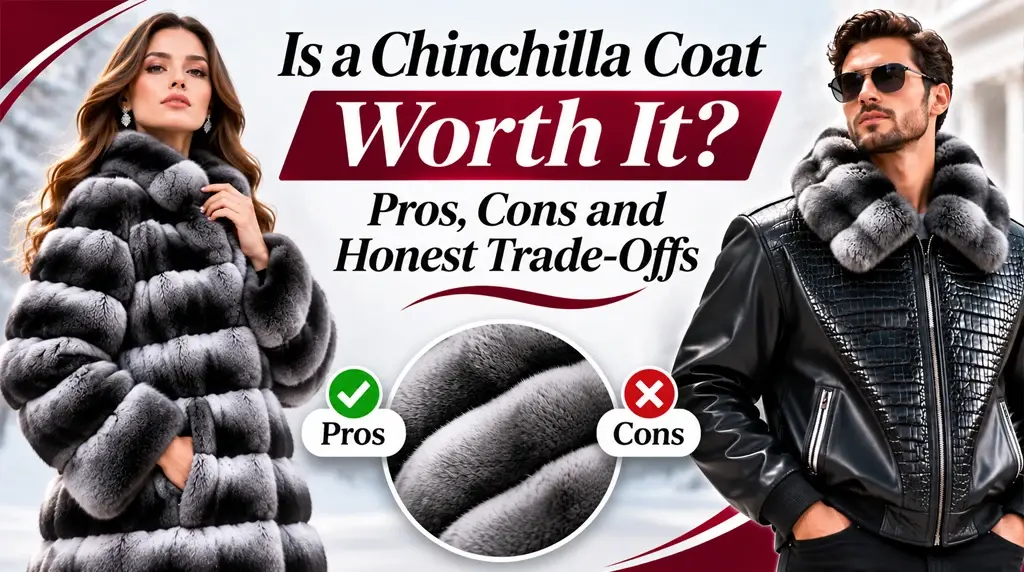
Is a chinchilla coat worth it? Yes, for some buyers. It suits people who value rare softness and will wear it for many winters. However, it does not suit buyers who want low upkeep.
Where a Chinchilla Coat Earns Its Price
The fur is soft and light. It also gives warmth without heavy weight. The look is easy to recognize. Best of all, it lasts a long time. With proper storage and cleaning, a fur coat can last for decades.
What to Weigh Before You Buy
Think about these points before you commit. Each one affects the real cost of owning the coat.
- Upkeep: yearly specialist cleaning and summer storage add to the running cost.
- Climate and use: count the cold days you will really wear it.
- Sourcing and law: wild chinchillas are listed as Endangered by the IUCN. Fur-industry chinchillas are farm-raised. Romania bans chinchilla fur farming from 1 January 2027. India has banned imports of chinchilla skins since 2017. Check the rules in your own country before ordering.
- Resale: value varies widely. Treat the coat as a long-term wardrobe purchase, not a financial investment.
Chinchilla Coat Styles: Full Length, Jackets, Vests and Colors
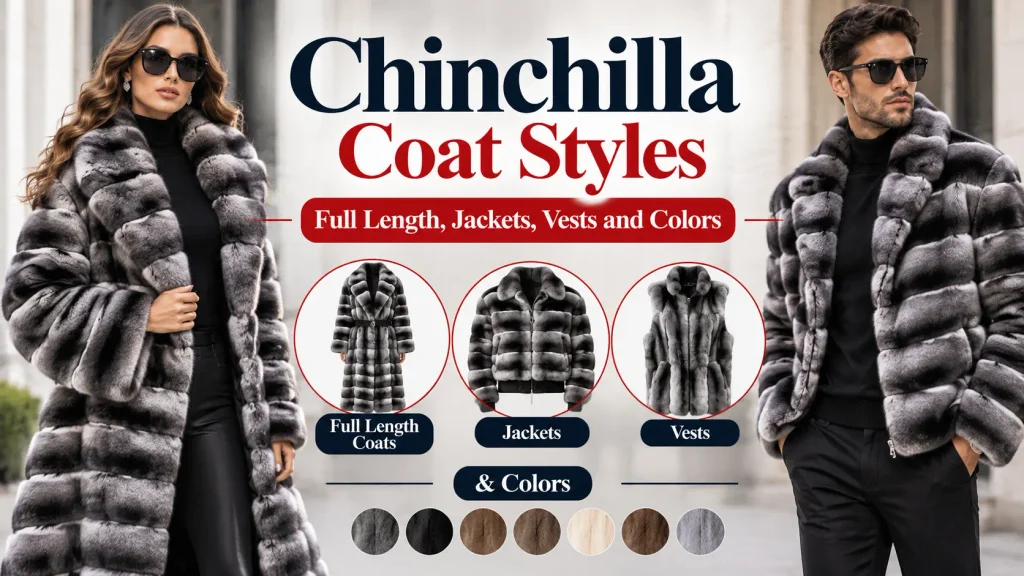
You must select the length first, then choose the color. The length decides how often you will wear the coat. Sometimes a shorter piece goes out more often, while a longer one suits special days. You can see every style below in one place. Browse the Chinchilla fur jackets and coats to compare cuts and colors.
Full Length Chinchilla Coat
A full-length chinchilla coat suits formal evenings and the coldest weather. It uses the most pelts, so it sits at the top of the price range. In return, it gives the most warmth and the most drama.
Wear it over a simple dress or a sharp suit. Keep the layers underneath slim. That way, the fur stays the focus of the outfit.
Always check each product page for the real length before calling any coat full length. Some coats stop at the hip or thigh. So read the measurements first.
Chinchilla Fur Jackets and Vests
A chinchilla fur jacket is easier to wear than a long coat. It works with jeans, tailoring, or knitwear. As a result, it often gets worn more days every winter. If you love a shortcut, then try the Women’s cropped chinchilla fur jacket. It sits at the waist and looks clean over high-waisted trousers. On the other hand, color can change a jacket’s mood; a soft shade feels light and playful. Likewise, deep shades feel calm and formal. So do think about your wardrobe before you select anything.
For a gentle touch of color, see the Chinchilla pink fur jacket. It pairs well with white tops and blue denim. Vests are a smart middle path. They add fur without the full weight of sleeves. Moreover, they layer well over shirts and thin knits. For that lighter layer, the Chinchilla pink fur vest works well over a plain knit.
Black Chinchilla Coat and Other Colors.
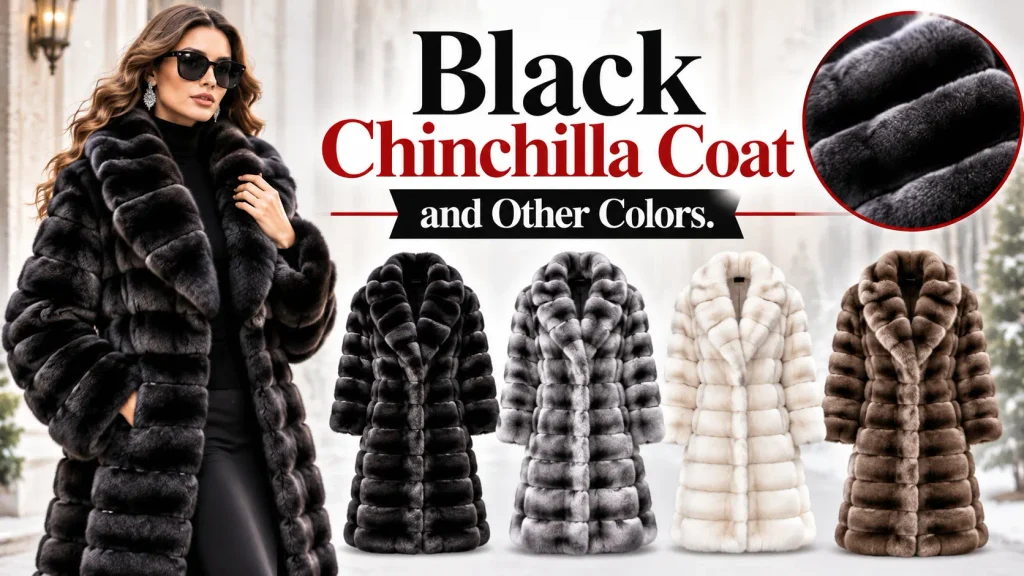
Black:
- A black chinchilla coat is the dressiest and easiest to style.
- It goes with almost everything in your closet.
- Wear it with tailoring or evening wear for a sleek look.
- Want less fur in your outfit? A collar is a good choice.
- The Frank sheepskin black jacket with a chinchilla collar offers a luxurious black option.
Grey:
- Grey is the classic choice.
- It suits a softer look and works in daytime as well as at night.
- Pair it with wool trousers or dark denim.
- Cream or navy underneath keeps the look calm.
- For this shade, try the Chinchilla grey fur coat.
Pink and purple (statement colors):
- Both shades draw the eye at once.
- Therefore, keep the rest of your outfit simple.
Pink:
- Pink looks fresh with neutral layers.
- The Chinchilla fur pink coat is a good example of this style.
Purple:
- Purple feels bold and rich.
- It looks best next to plain black pieces.
- If you want that bold shade, see the Chinchilla fur purple coat.
How to Care for a Chinchilla Fur Coat
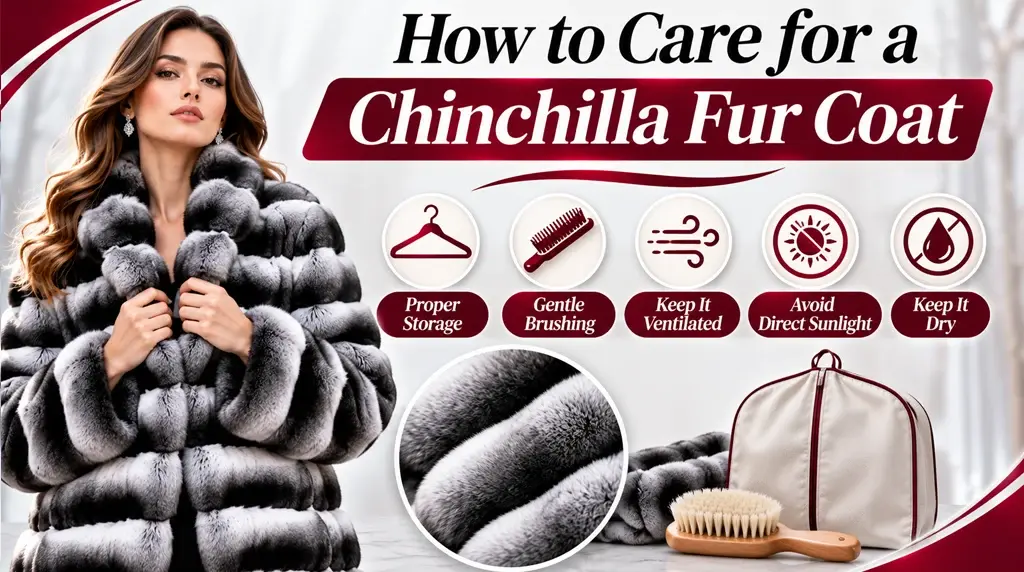
Learning how to care for a chinchilla fur coat is a great way to save money. Three habits matter the most. They are cool storage, a yearly cleaning by a fur specialist, and gentle everyday handling.
Storage
Hang the coat on a wide padded hanger with room around it. Then place it inside a breathable garment bag, never in plastic. Fur dislikes heat, friction, and cramped closets. For summer, choose professional cold storage for your chinchilla coat. Home storage does not stop the fur from drying out. This is true even in an air-conditioned or cedar closet. Also skip mothballs, because they can permanently change the smell of the fur.
Cleaning
You must arrange a fur specialist to clean the coat once a year. A regular dry cleaner is the wrong choice. At the same time, do not treat marks with household cleaners. They can harm the skin and the hair. For more detail, the Leather Jacket Care Guide explains fur cleaning step by step.
Everyday Habits
Keep perfume and hairspray away from fur. Start by spraying your scent first and let it dry. Later on, put the coat on. Additionally, carry bags in your hand rather than on your shoulder. This limits friction over time; rubbing wears down the fur in one spot.
Quick care checklist:
- Hang the coat on a wide, padded hanger.
- Use a breathable garment bag—never plastic.
- Book cold storage for summer.
- Visit a fur specialist once a year.
- Avoid perfume, hairspray, and shoulder bags.
Where to Buy a Chinchilla Coat Online (and What to Check First)

You must check five things before you pay. These things are material, fit, returns, delivery rules, and overall cost. Skipping any of them can lead to a costly mistake.
Your Buyer Checklist
Before you buy a chinchilla coat online, use this list:
- Material and lining are stated clearly on the product page.
- A size chart with measuring help is shown.
- A written return and exchange policy is given.
- Shipping and import rules for your country are clear.
- Photos are clear, and real customer reviews are present.
Take your time with each point. A good seller answers questions with ease. Meanwhile, a poor seller hides details.
When a Women’s Chinchilla Fur Coat Sale Is Worth Waiting For
Sometimes timing can lower the cost. A chinchilla fur coat women’s sale often appears around big shopping events. For this reason, patient buyers can save big. Moreover, the most common time for offers is winter. If you plan a gift, watch the Christmas jackets and coats collection early in the season. Online sales days are another good moment. Prices may drop on many styles at once.
The year’s end brings one more chance. If you miss the earlier sales, check the New Year sale for late offers. Even then, shop only when the fit, material, and return terms are right. A low price is never worth a poor match.
Final Thoughts
The chinchilla coat costs quite a lot. However, its price follows its pelt count, quality, and craftsmanship. It suits buyers who love soft fur and will wear it exclusively in winter. Moreover, to protect it, store it in a cool place, clean it yearly, and handle it gently. So, are you ready to pick a style? If the answer is yes, then head back to the style section and choose your length to begin with.
Frequently Asked Questions
How many chinchillas does it take to make a coat?
A full-length coat can need up to 150 pelts. The reason is simple. The animal is very small, so each coat needs many pelts to cover the body.
How long does a chinchilla coat last?
With cold storage in summer and an annual cleaning by a specialist, a fur coat can last for decades. Good care is the key. Without it, the fur dries and wears faster.
Can I clean a chinchilla coat at home?
No. Use a fur specialist once a year. Do not use a regular dry cleaner or household products. These can harm the fur and leave marks that are hard to remove.
Is a black chinchilla coat better than a grey one?
It depends on use. Black is dressier and easier to style. Grey shows a softer, classic tone. Choose based on where you plan to wear the coat most often.

Team Leather Jacket Black writes guides on costumes, fashion and jacket picks for every season.
More to read
View all in Blog


Love this style?
Get the jacket from this story, made to order and delivered to your door.